In Vietnam, infrastructure has become a national priority. Across 2025, roughly 550 major projects were announced or broke ground, with a combined value exceeding USD 280 billion. Airports, highways, metro lines, ports, and megadevelopments are moving forward at a pace the country has not seen before, reflecting Vietnam’s ambition to reposition itself on the global stage.
Sports infrastructure is now part of that push. In Hưng Yên province, the 60,000-seat PVF Stadium broke ground in late 2025 with plans for a retractable dome and AI-powered crowd systems. Outside Hanoi, Vingroup’s proposed 135,000-seat Trống Đồng Stadium aims to become the world’s largest when it opens in 2028. Together, the projects signal a country beginning to see sports and entertainment infrastructure as extensions of national identity and ambition.
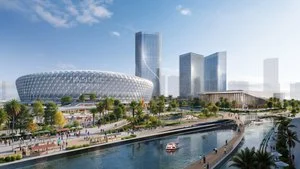
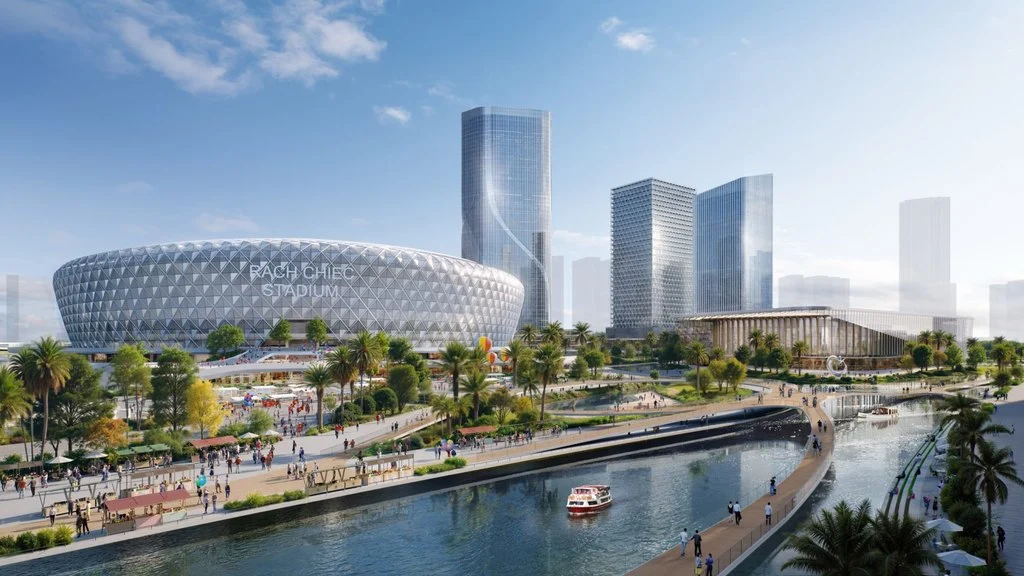
But in Ho Chi Minh City, Rạch Chiếc may be the most consequential of them all. Developed by a subsidiary of Sun Group, the 186.78-hectare sports complex carries a total investment of VND145 trillion, or roughly USD 5.52 billion. At the centre of the master plan is a 70,000-seat stadium with a retractable roof and zone-controlled air-conditioning, designed by Populous, the global architecture firm behind the London Olympic Stadium, Sphere in Las Vegas, and Kai Tak Sports Park in Hong Kong.
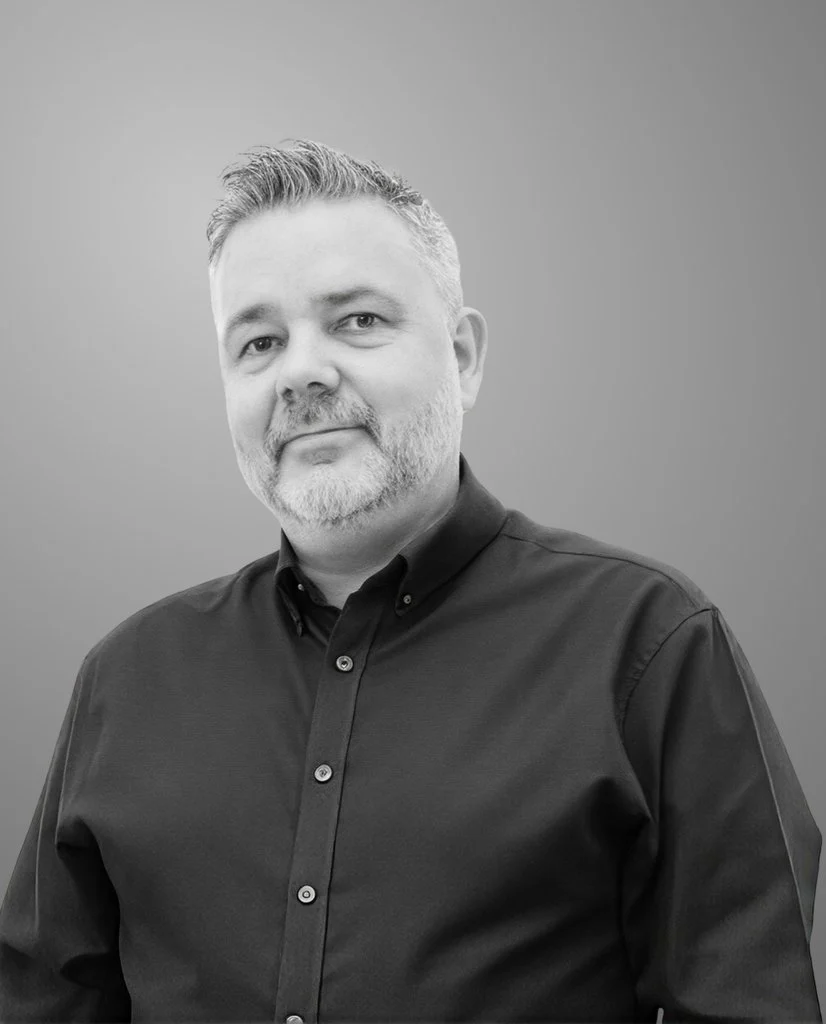
Leading the project is Andrew Tulen, APAC Director at Populous. Born in Melbourne and based in Singapore for the past 15 years, Tulen now plays a key role in a development that asks whether Vietnam is ready to build at the scale expected of a global sports and entertainment destination.
More Than a Stadium
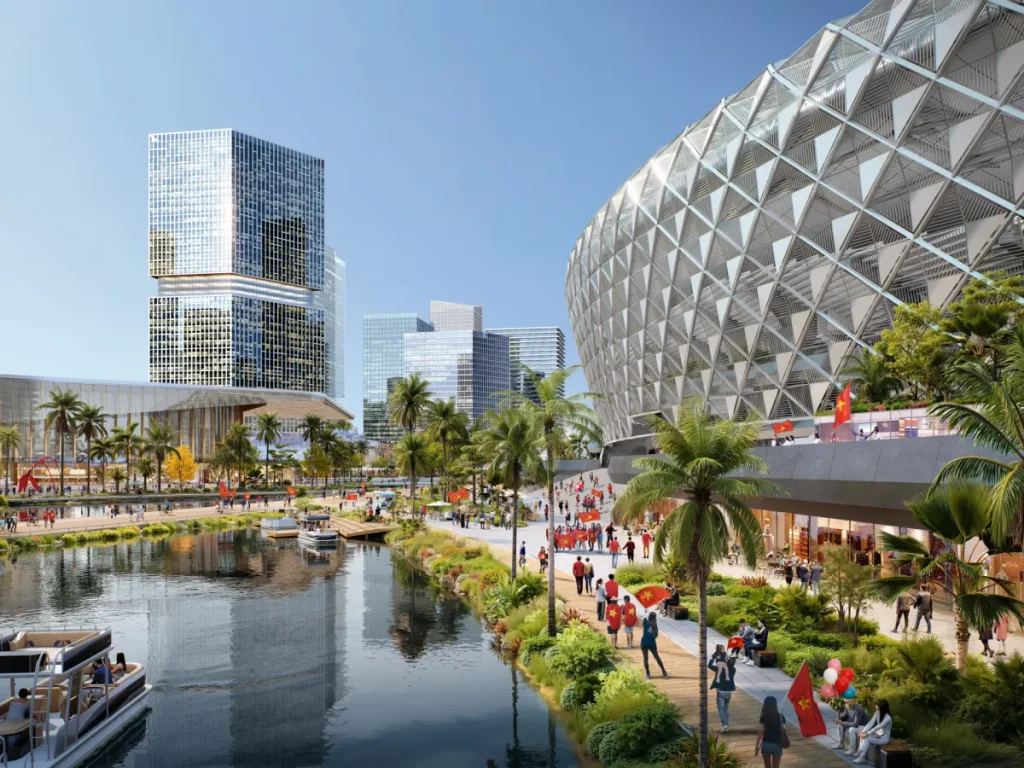
According to Tulen, the era of the standalone stadium is over. Modern venues can no longer function as isolated buildings used only on match days. Instead, they need to operate as mixed-use districts active throughout the week through retail, recreation, healthcare, food and beverage, and public space.
“Gone are the days when you were able to build a large-scale stadium in the middle of a field and call it sustainable,” he says. “Developers are well aware now that this building type has to have a whole lot of other stuff come with it. And that master planning piece—getting that right—is critical.”
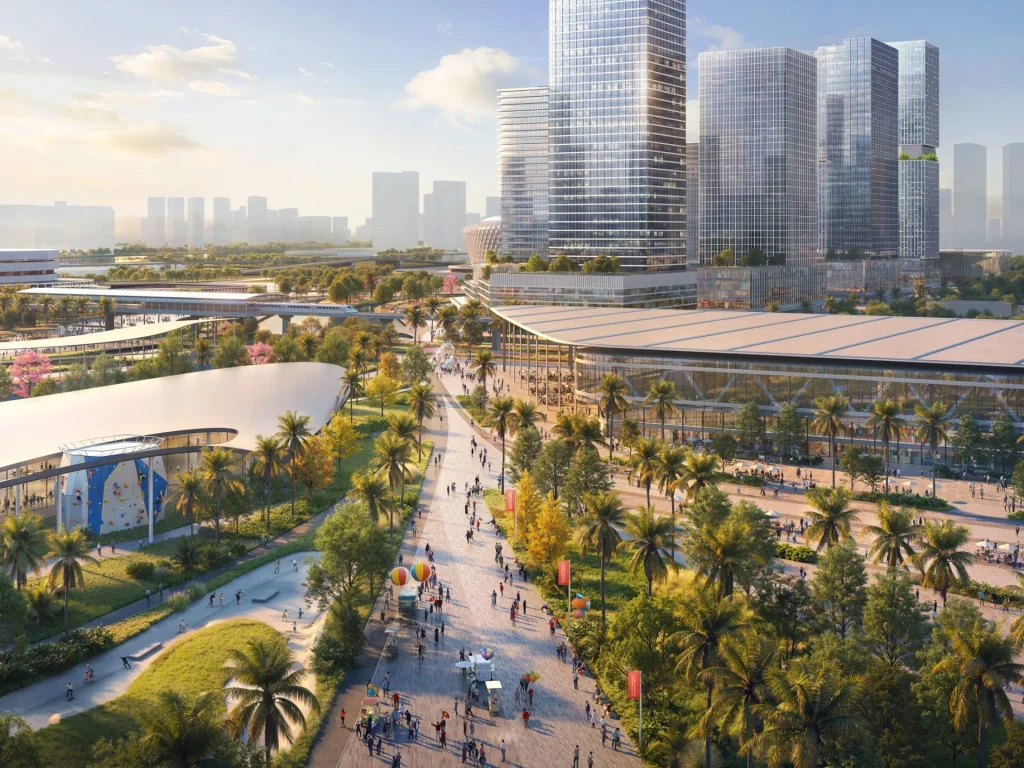
At Rạch Chiếc, that philosophy shapes the entire precinct. Alongside the stadium, the master plan includes an 18,000-seat arena, a flexible sports centre, aquatic and tennis facilities, football training grounds, sports medicine spaces, recreation areas, and a conference centre for up to 10,000 delegates. According to Populous, the site could eventually host roughly 90 percent of Olympic sports.
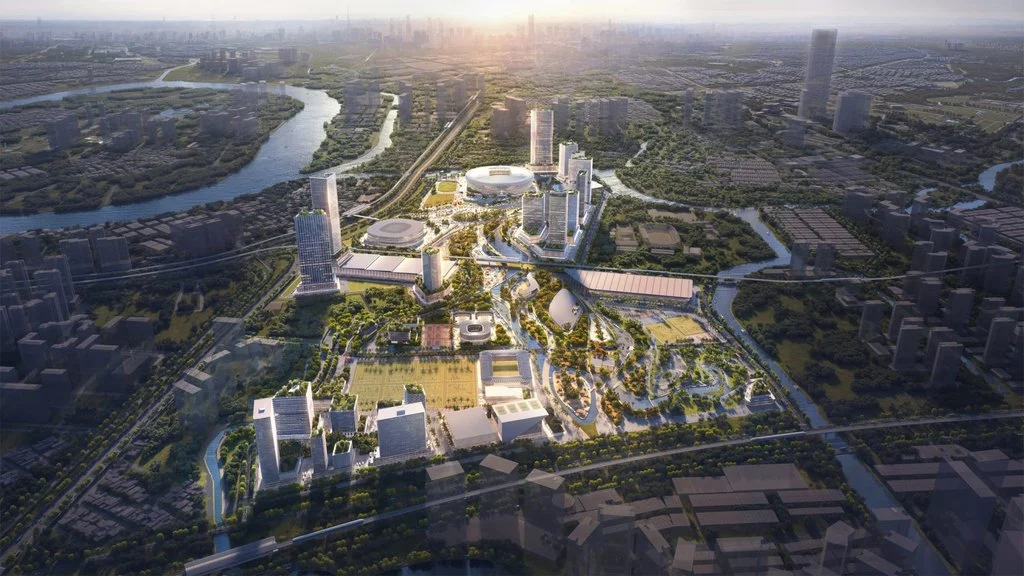
The larger goal, Tulen explains, is not simply building a stadium but building a district people continue using long after the final whistle. Restaurants, markets, parks, and public gathering spaces are integrated into the master plan from the start, alongside smaller venues for youth-focused urban sports.
“What we have the opportunity to do here is provide a community-based development,” he says. “Key to it all is a park and a riverscape that ties it together and makes it a real place for people.”
“All of the design work that we’re doing is integrated with food and beverage offerings, restaurants, commercial markets, and sports facilities, so that it’s not just one stadium that gets used once every six months. We’re talking about 365 days of activation.”
The Water Palm
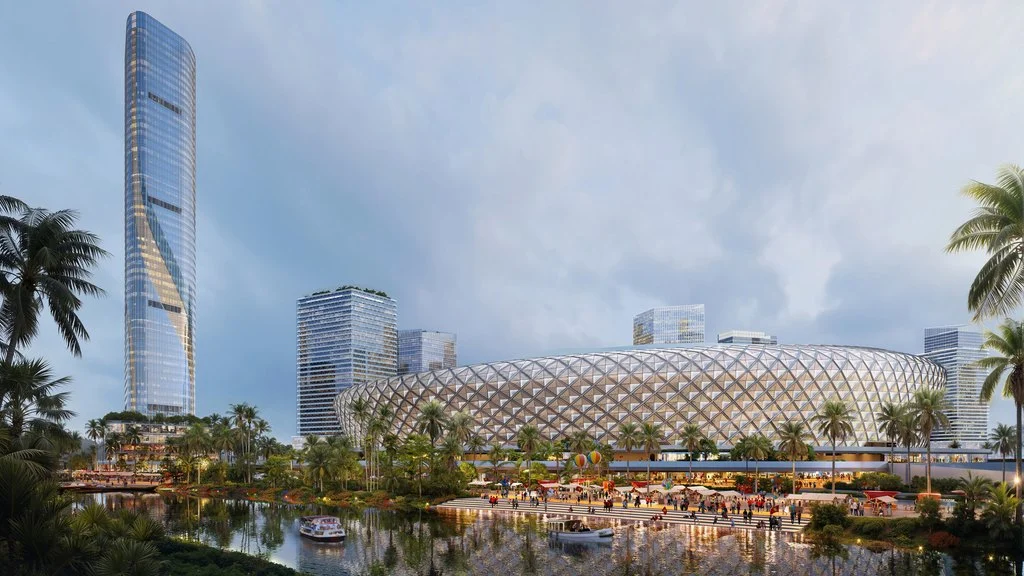
Many large developments in Vietnam borrow visual language from overseas references. Rạch Chiếc moves in a different direction. Instead of looking outward, the design team focused on the geography and cultural textures of southern Vietnam itself.
For Tulen, that connection to place was essential from the beginning: “I think buildings with integrity should reflect their culture and context in some way. It has to reference it and be mindful and respectful of it.”
The design process moved through several ideas before arriving at the final direction. Early concepts explored Vietnamese craft traditions, patterns, textures, and structural rhythms as ways to connect the buildings to their setting.
“We were looking at ideas around craft, and different references for what these buildings could be and how the whole place could come together,” Tulen explains. “We explored patterning and rich textures, and how we could incorporate that into facades, repetition, spacing, or structural elements.”
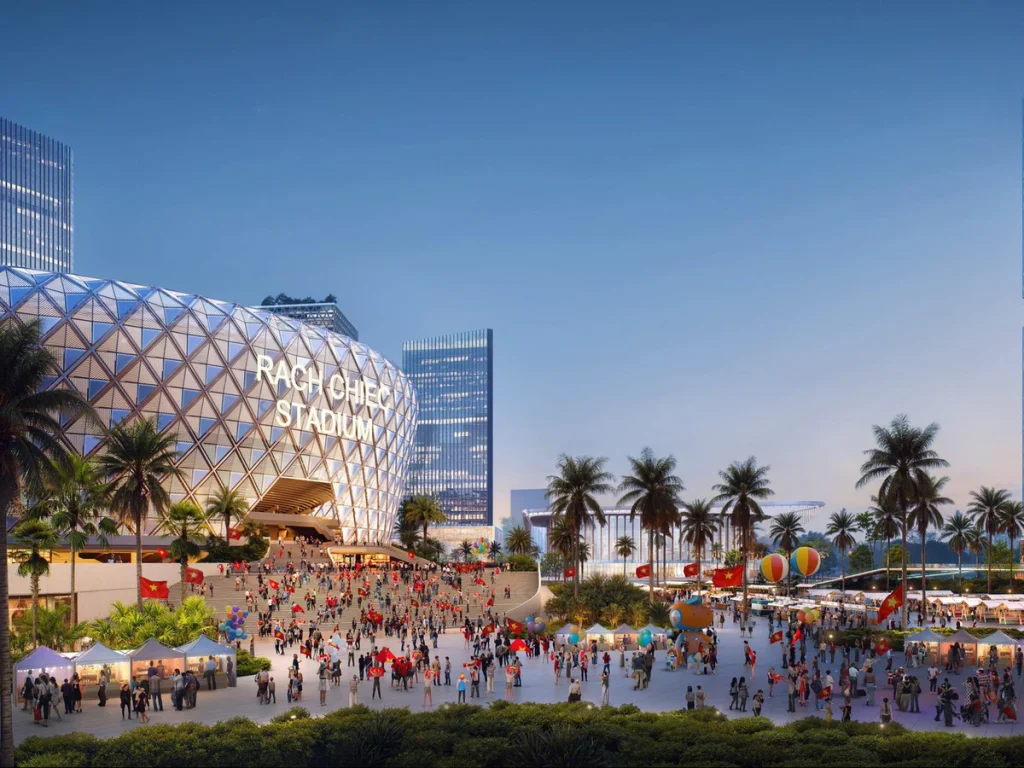
The final inspiration came from the waterways surrounding the site and the qualities the client wanted the project to represent: resilience, openness, growth, protection, and community. Those ideas led the team toward the Nipa palm, or cây dừa nước, that lines the rivers of southern Vietnam.
“We did a bit of research into the palms as a captivating image,” Tulen says. “We dug into what these things do, how they protect the riverbanks, and create space between the riverbanks for people to do their trade.”
That idea shaped the stadium façade as an open concourse wrapped in a screening layer that filters sunlight, weather, and airflow while keeping the building connected to its surroundings. The goal, Tulen says, was never literal symbolism: “You need to capture the essence of something, but not just replicate it.”
Peak Season
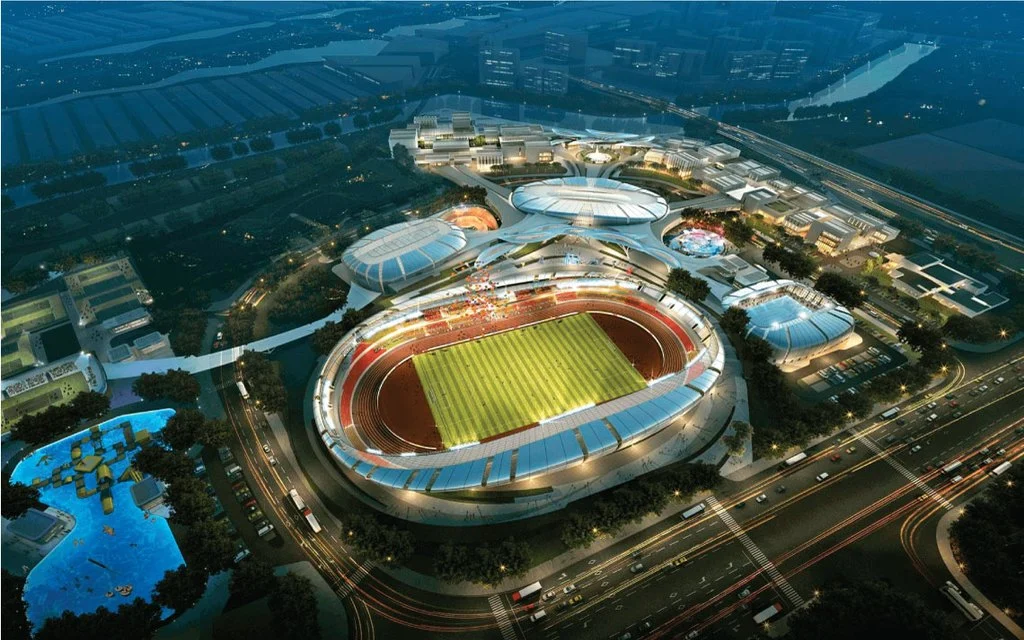
For Tulen, Vietnam represents one of the last untapped markets in Asia for large-scale sports and entertainment events. The audience already exists. What the country has lacked is the infrastructure.
“From a sports and entertainment perspective, it’s an untapped bastion,” he says. “There’s a large fan base, but it’s the last place in Asia where big acts aren’t currently going. And I’ve heard from people who book large-scale acts that they’re excited by the prospect as well.”
As the world watched the 2026 FIFA World Cup, Populous had a major presence inside the tournament, handling the design or renovation of six stadiums across the U.S. and Mexico. Rạch Chiếc, while still years away from completion, is being designed with those standards in mind.
“Some of those might feel a little bit out of reach,” Tulen says. “But all of the venues at a master plan level have been designed so that large-scale events like Southeast Asian Games and AFC Cups can happen. A lot of Olympic standards have already been captured in the planning.”
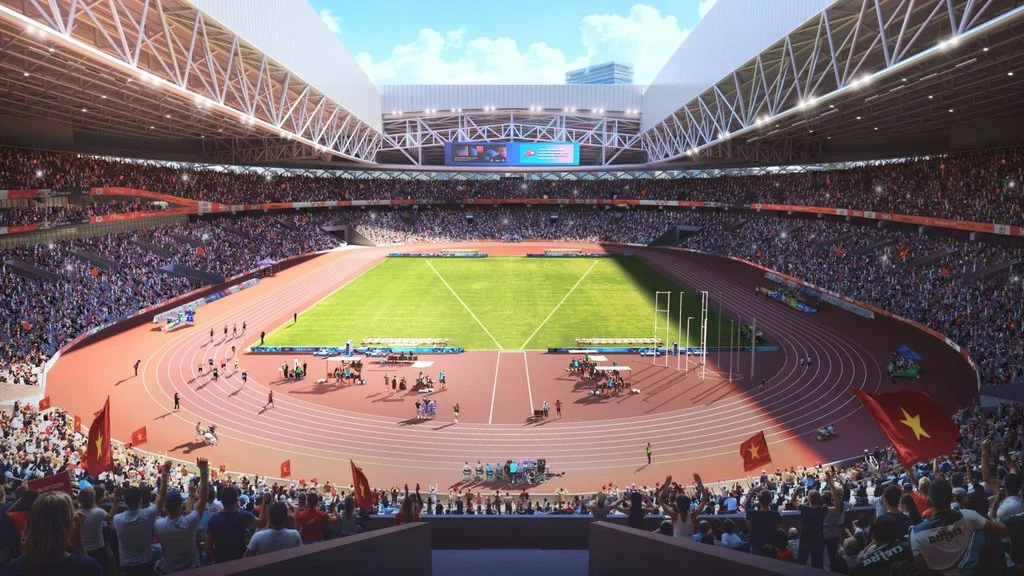
For Tulen, the significance of projects like Rạch Chiếc goes beyond sport itself. A venue at this scale changes how a country is seen internationally—not only by fans, but by investors, performers, governing bodies, and the broader entertainment industry. “It really turns the focus of the world on it,” he says. “And that’s the real opportunity here. It’s just the start.”
Still, Tulen argues, the more important question comes after the spotlight disappears. He points toward the 2024 Olympics in Paris, where organizers focused on reuse, flexibility, and long-term integration rather than building one-time monuments.
“You can’t just rely anymore on a single event,” he says. “It’s important these venues don’t become white elephants. They need activation around them, they need people, and they need to offer something back.”
In that sense, Rạch Chiếc is a test of what Vietnam’s next phase of growth might look like. The real measure of success may not be the size of the crowd on opening night, but whether the precinct remains part of the city’s daily life years later.
Image courtesy of Populous