In the era of artificial intelligence, creating seems easier than ever. A quick A.I. prompt can generate walls of text, conjure a painting or design a poster in seconds. Creation, it appears, has become frictionless. But in an environment where nearly everyone has access to the same tools, what separates you from the algorithm?
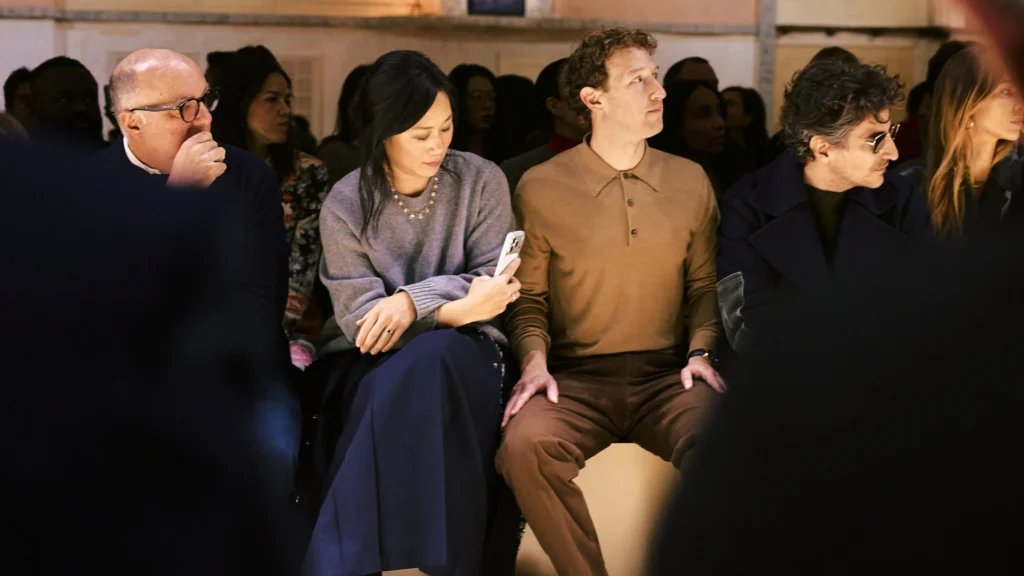
The answer is taste, and everyone is vying for it—even the bros behind the tech. Greg Brockman, president of OpenAI, took to X to proclaim that “taste is a new core skill,” while Anthropic, the company behind Claude, described its updated model as more “tasteful.” Meanwhile, Silicon Valley appears increasingly eager to acquire some taste by association: Jeff Bezos served as an honorary chair of this year’s Met Gala, while Mark Zuckerberg was seated front row at Prada during Milan Fashion Week. In an industry where competing technologies can increasingly resemble one another, cultural capital offers another way to stand apart.
Modernly, taste has become almost synonymous with coolness—and, assuredly to anyone outside Silicon Valley, A.I. could use a polishing of its image. But taste is far more complicated than the buzzword it has been flattened to. Rooted in the philosophy of aesthetics, it can perhaps be understood most simply as our ability to discern: to look at something, decide whether we find it good or bad, and exercise a point of view. In Susan Sontag’s seminal 1964 essay Notes on “Camp,” she wrote, “Taste governs every free—as opposed to rote—human response.”
Taste, Sontag argued, is an active process with “no system and no proof.” It requires curiosity and a sensitivity to your surroundings. To develop taste is to be a voracious, intuitive eater: to consume the world around you, spit out what you dislike, return to what you love and, over time, develop a palate of your own. It is built through exposure and experience, but also through rejection.

Taste, of course, is hardly a new preoccupation. So why does everyone suddenly want to talk about it? For one, social media and the influencer economy have democratised taste—or at least the appearance of having it. Which books to read, which films to watch, where to eat in town, what to buy and how to dress: what may begin as individual preferences can swiftly become homogenised, pre-curated aesthetics once fed through the algorithm.
Then there is the ugly elephant in the room: A.I. and its endless churn of content slop. While certain bubbles applaud the technology, many others see it as a threat to creative livelihoods and to creativity itself. Taken together, the problem begins to feel less like a shortage of things to consume than an overwhelming abundance of them. In that environment, the ability to pick and choose—to discern—becomes more valuable than ever.
Yet taste is not something that can simply be programmed or engineered. It stands in contrast to A.I. precisely because it is an inherently human process, shaped by experience, context, contradiction and error. Silicon Valley’s search for a machine capable of exercising taste may well be a perennial quest. Perhaps that is also why the industry seems so interested in looking tasteful by association.
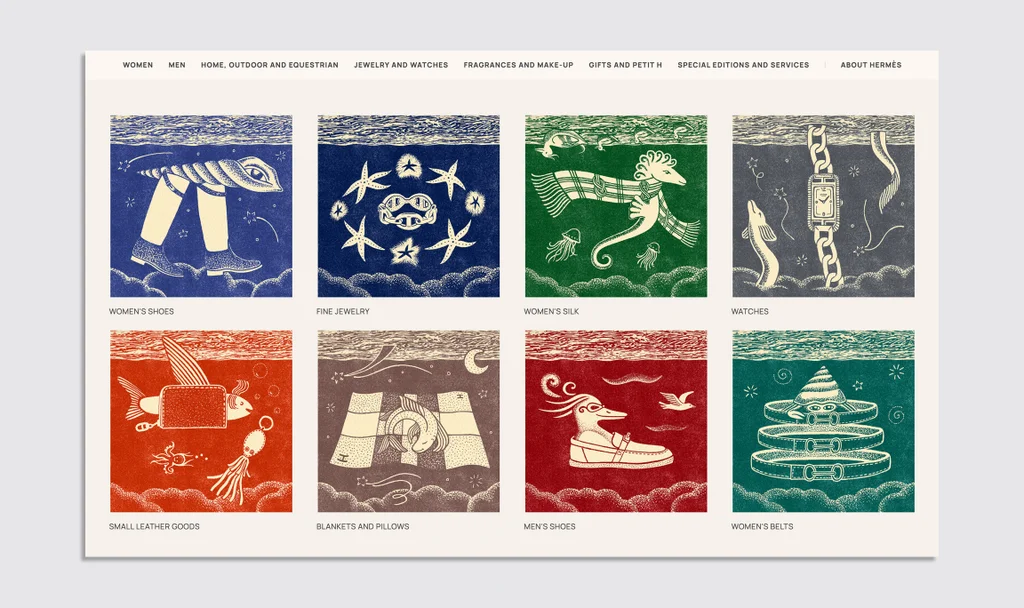
At the same time, that pursuit has provoked a growing pushback against A.I. across creative industries. In Hollywood, actors, writers and filmmakers have fought for protections over how their work and likenesses can be used by A.I.; in music, artists have challenged synthetic voices and machine-generated songs. Fashion, meanwhile, has doubled down on the human hand: luxury brands like Burberry, Loewe and Hermès have commissioned hand-drawn campaigns and animation, while designers increasingly foreground the processes behind making their clothes.
Across these fields, the response is strikingly similar: an emphasis on process, authorship, craft and imperfection—the very things A.I. is designed to make invisible. And therein lies what tech bros seem to miss: taste is friction. It is flawed and sometimes simply bad, but those human mistakes are necessary to cultivate it.
For Vietnam, that idea feels particularly urgent. We have centuries of cultural history to draw from: architecture shaped by colonisation and reinvention, regional cuisines, and traditions of pottery, textiles and lacquer painting. At the same time, we are one of the world’s fastest-growing economies, consuming new technologies and global culture with a ravenous appetite. But we already possess an extraordinary archive from which to develop our own point of view. We do not need an algorithm to tell us where to look.
Nor does developing a distinctly Vietnamese point of view mean retreating into the past. A new generation of designers, artists, chefs, musicians and other creatives is already taking what came before and deciding what to preserve, or transform. That process of selection—between inheritance and influence, tradition and experimentation—is itself an exercise in taste.
Cultivating taste, after all, is not simply knowing what is good or bad. It is knowing what is—and what is becoming—wholly yours. That cannot be generated by a ChatGPT prompt. It comes from looking widely, choosing carefully, getting it wrong and, eventually, learning to trust your own point of view.