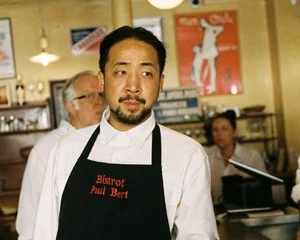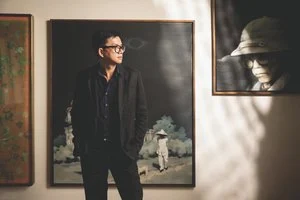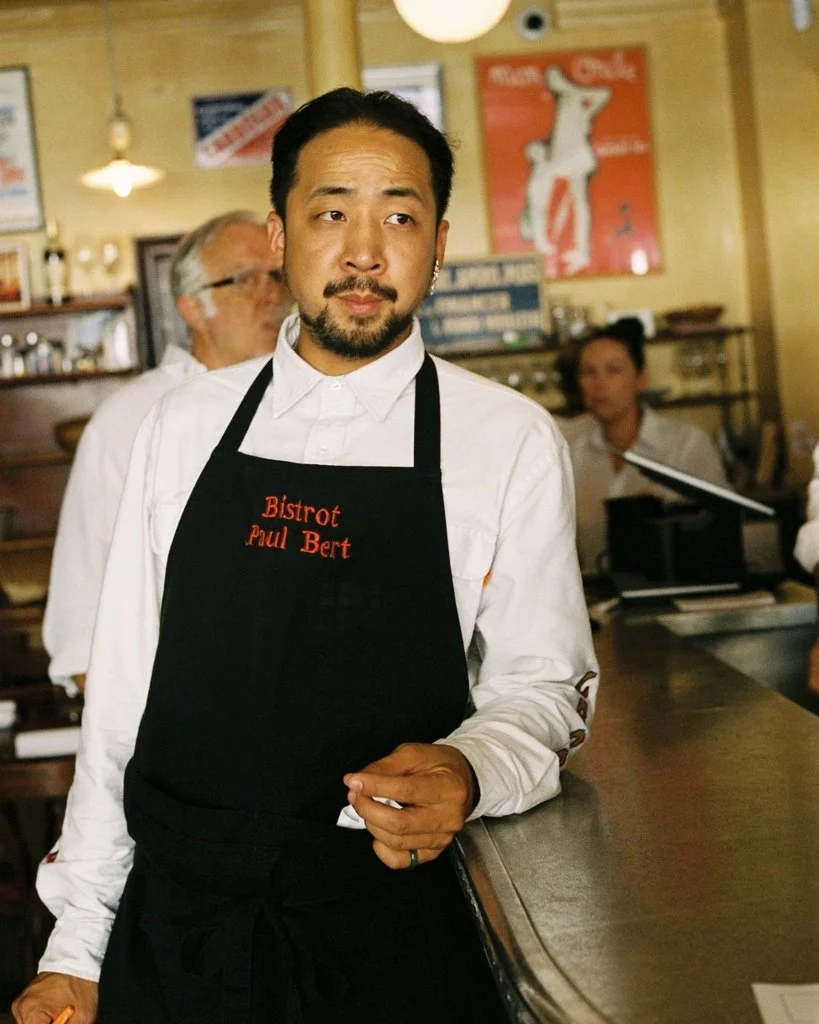
Julien Đô Lê Phạm is the person the Paris food world calls when it wants to throw the city’s hottest culinary event. But the first meal he can name, he ate in the dark. Pham has built a career producing the sort of cultural capital Paris fetishizes from the very immigrant experience Paris once taught him to minimize.
It all began in a kitchen in the Paris suburbs, well before dawn, the windows still black and the building still asleep, and a small boy already seated at a table. In front of him sits thịt kho tiêu, pork lacquered in caramelized fish sauce and black pepper, spooned over a French baguette his grandmother has reheated until the crust cracks all over again. She feeds him this before school, the way she feeds him most things, plainly and with her whole attention.
The taste has stayed with him every day since. Thịt kho transports him to Vietnam, a passport written in caramel and pepper.
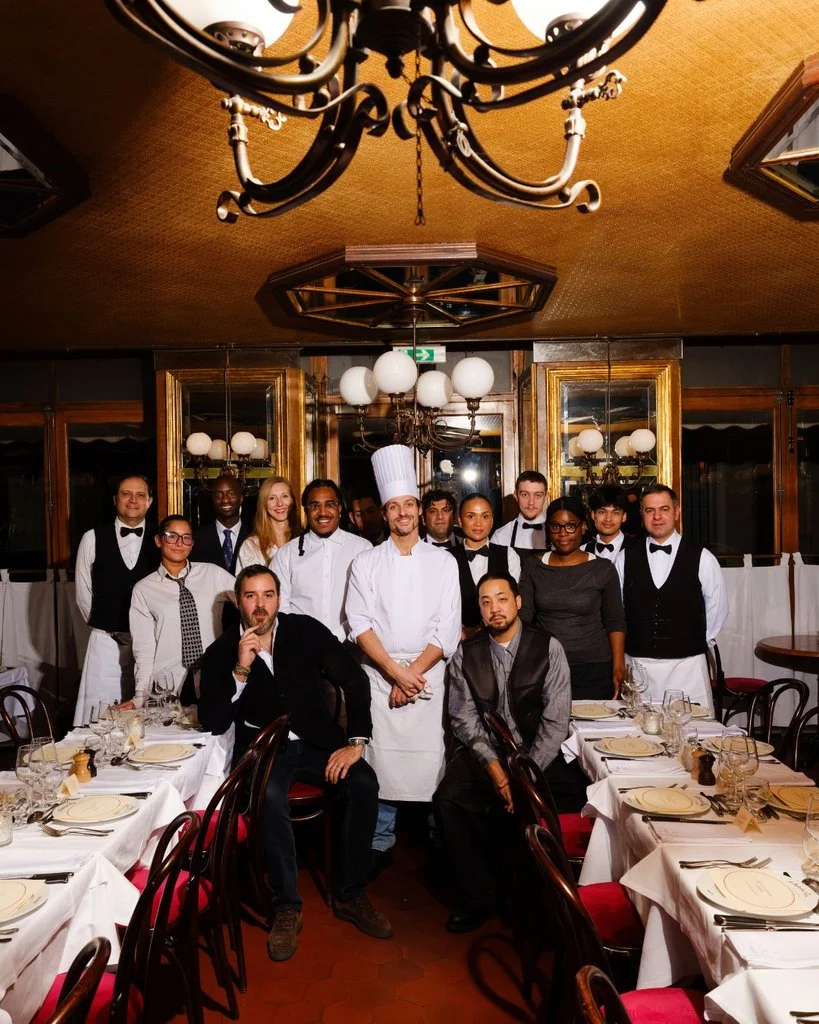
Food eventually became a profession, although not initially through a kitchen. In 2009, Pham founded Fricote, the cultish food-and-culture magazine he ran for nearly a decade before selling his stake and beginning again. What he built next, Phamily First, operates somewhere between a culinary agency, cultural fixer, and very good address book.
His other project, wine bar Chop Chop, is in the 10th arrondissement of Strasbourg Saint-Denis, co-owned with Ismaël Jmili and Ramy Ndione, the same team behind La Chope des Artistes. It draws a crowd from fashion, art, and design who come for the wine as much as its buzzing room. Natural wine, fashion people, and chefs passing through town: the holy trinity of contemporary Paris.
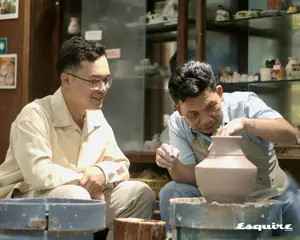
Specific dishes that have come through the kitchen include a tajine kefta bun with zaalouk and toasted Jura comté, a chicken broth soup with vegetables and rice, and homemade fresh pasta with Bolognese sauce and sheep’s tomme. It’s less a fixed cuisine than a rotating showcase of personal, seasonal cooking, paired with a natural wine list curated from French and international winemakers. Chefs move through in short residencies, each bringing their own take on the kind of cooking that starts at a family table: dishes built from memory, reworked with ingredients gathered from well beyond Paris.
A banlieue childhood taught him to keep his hopes modest. “The way we are conditioned in the suburbs of Paris, the lack of examples, role models, and opportunities, it just makes you want to secure the minimum,” he says. There were the supermarket shifts and the fast-food counters and the outlet stores, the whole apprenticeship of a young immigrant kid learning that ambition was reserved for other postcodes. Cinema, hip-hop and football offered exits, at least imaginary ones. Most of the kids around him were figuring out how to stay afloat. Pham was figuring out how to leave.
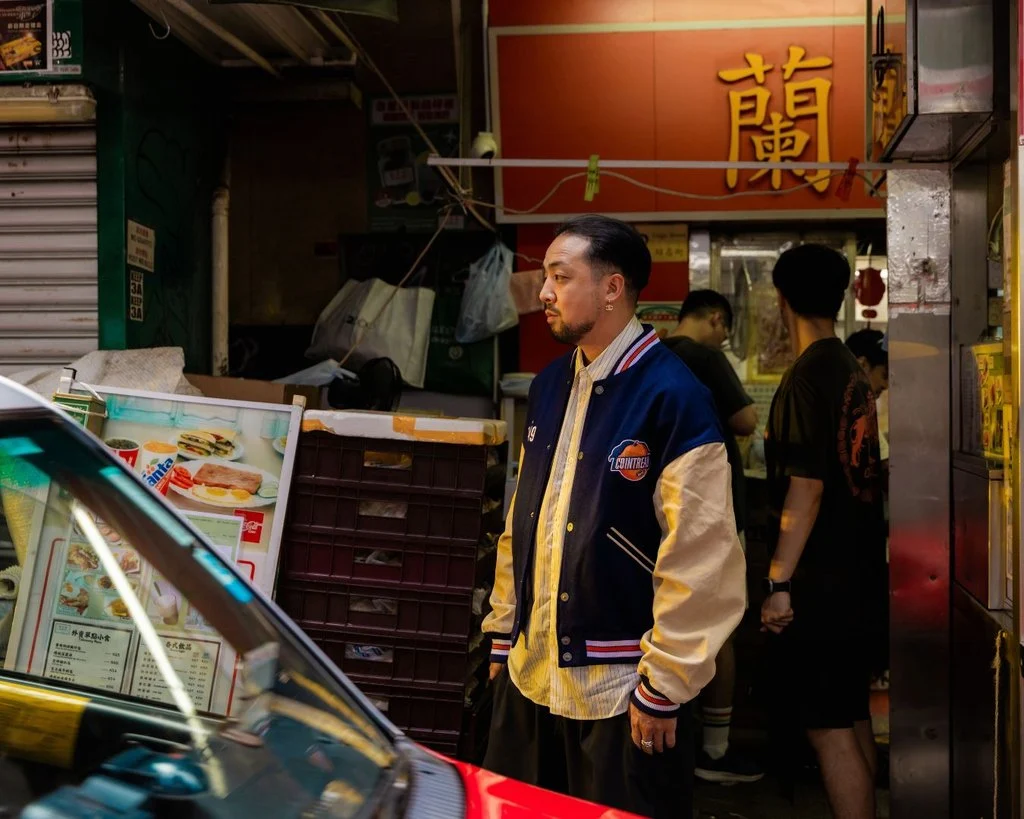
What he carried out of the house was a kitchen. He and his siblings were raised on Vietnamese food while his mother worked the register at Monoprix, brought home discounted produce, and taught herself French recipes—the food of a country she was still learning to call home. “That sums up what growing up French Vietnamese in the suburbs was,” he says
At home, France and Vietnam negotiated with one another at the stove.
For years, Pham thought that being part of the diaspora came with an assignment: to explain Vietnam correctly to France. He no longer believes that. Going back to Vietnam again and again, he watched a cuisine shaped by struggle and survival, built on using everything—the soil, the animals, and the land—now being rewritten by a younger generation with its own ideas. “Who am I to say what is authentic Vietnamese?” he asks. “I am a French Việt Kiều who grew up in the suburbs of Paris.” What’s left is a smaller demand: respect. In Paris, he wants Vietnamese food treated with the same specificity as any other cuisine, not folded into a catch-all idea of Asian food. “Parisians don’t know shit about Vietnam,” he says, “and they don’t make the effort.”
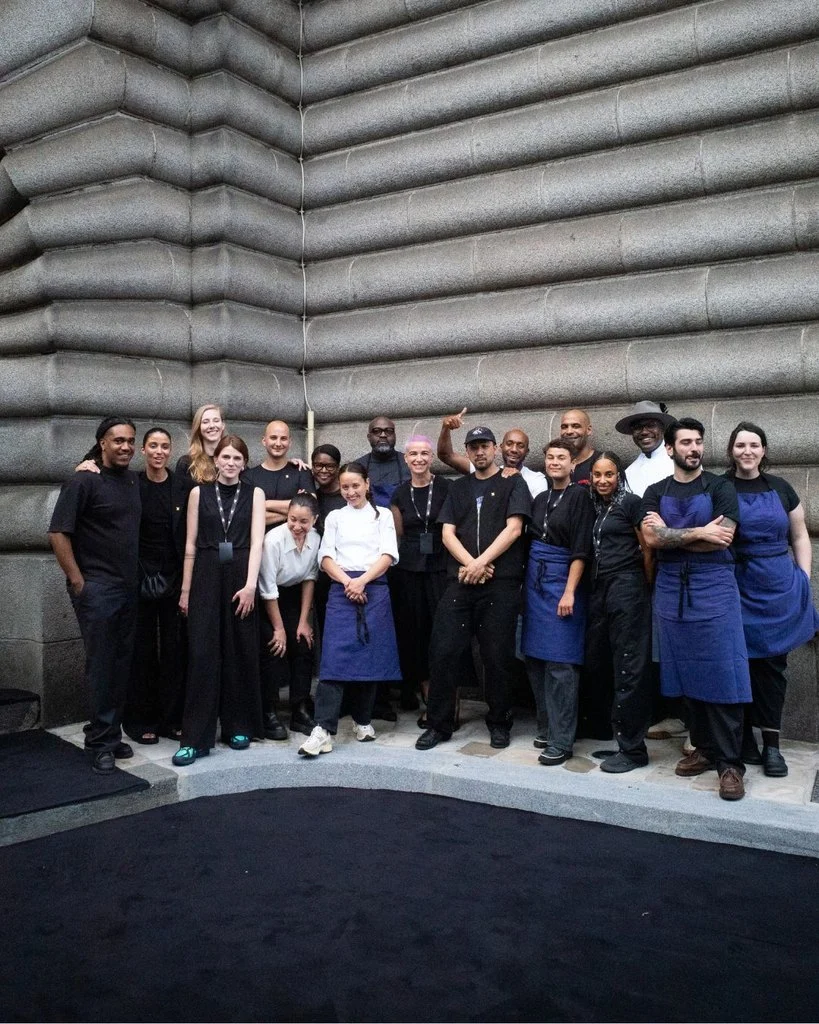
With Phamily First, Pham finds joy in working in teams. He founded his own company, only to discover he disliked the solitude that usually comes with being the founder. By temperament, he would rather stay behind the curtain. “I wish I were more in the background, actually,” he admits. “But I realized that personifying my project was important. To get bigger and better ones.”
When he flies into Hanoi or Ho Chi Minh City, does he feel like he’s arriving somewhere new or returning to something old? “Neither,” he says. He feels himself discovering a culture and, at the same time, wanting to repay it. He understands the plight of diaspora kids who act as if the country owes them something. Show respect, he says, and the door opens. “They don’t need me here,” he says of his parents’ country. “But if I can help with anything, I am here.”
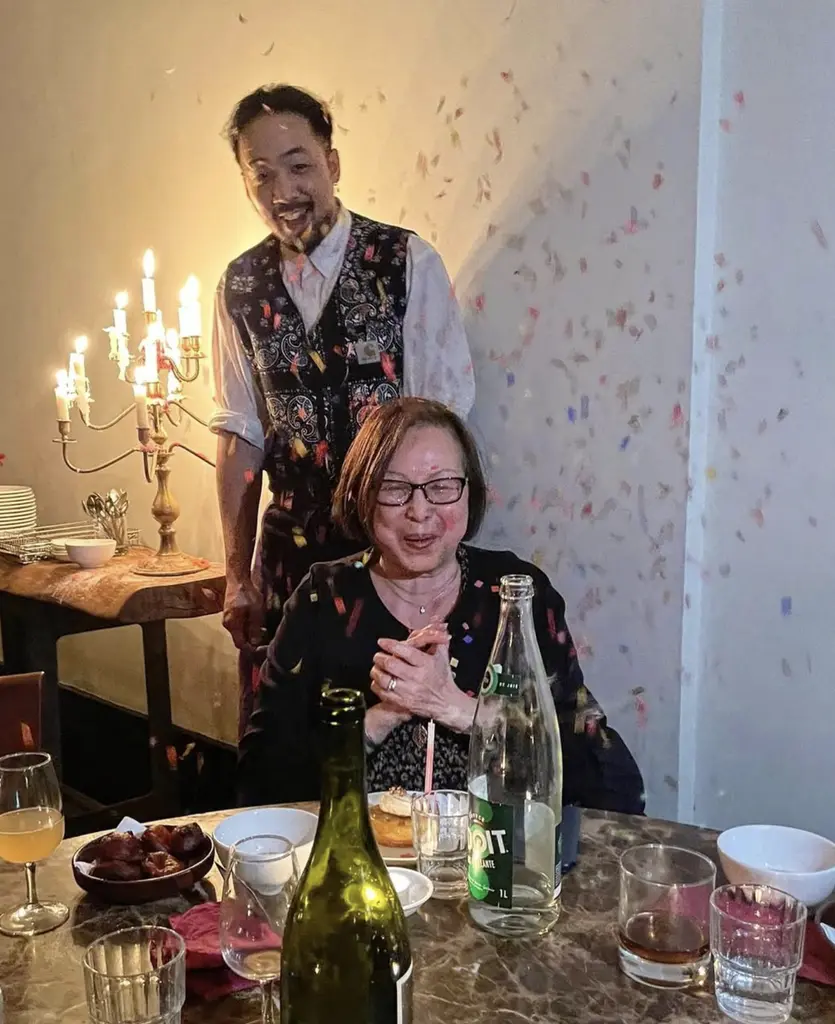
Food, for Julien Pham, is a pretext for love. He learned that language first as a child at his grandmother’s table. Now he speaks it by feeding other people.
Ask him who he’s inviting to dinner, and the answer is anyone willing to share a sincere, humble meal. Then, because the agency is also a philosophy, he corrects himself. Phamily First. His girlfriend, his family, his closest friends. Every day, he says, he cherishes being Vietnamese a little more. The boy once fed in the dark has built a life out of feeding everyone else.
After all, it’s all in the Phamily.