James Bond may have immortalized the martini with his famously suave order—“shaken, not stirred”—but this iconic cocktail was already synonymous with the gentleman’s lifestyle long before 007 made it his boozy calling card.
The gin martini is thought to have first taken shape in the United States in the late 19th century, when bartenders began pairing London dry gin with dry vermouth. In the century since, it has become one of the most storied cocktails in popular culture—equally at home in Hollywood films, literary salons, and the hands of icons from Hemingway to Bond.
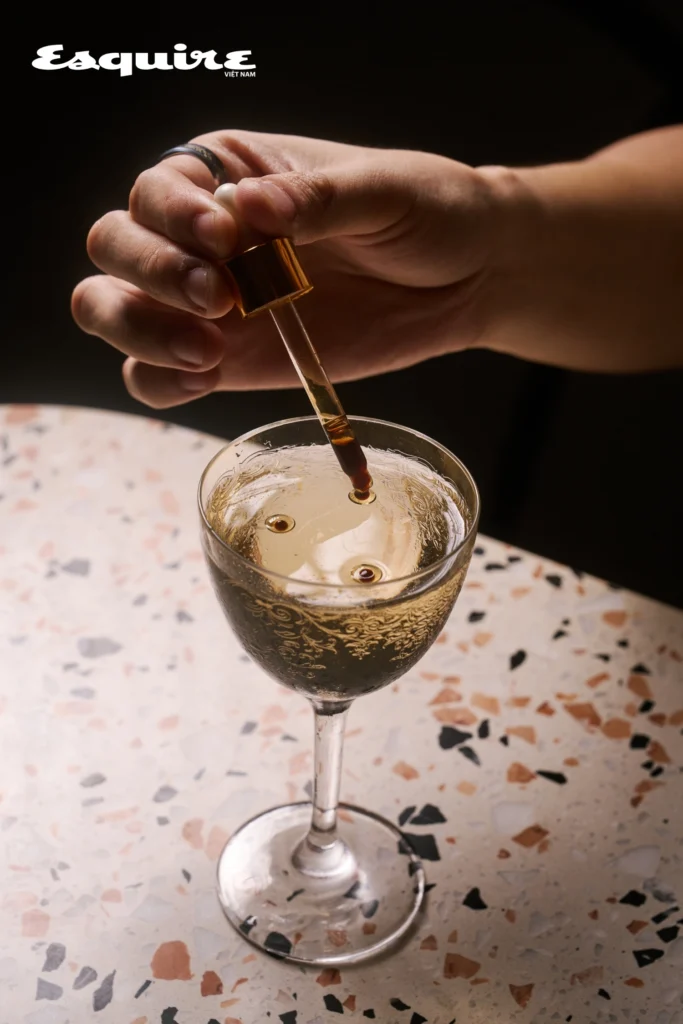
From its crystalline appearance to its sophisticated stemware, the martini has always embodied the marriage of simplicity and elegance. Made with either vodka or gin, it’s both timelessly classic and endlessly adaptable. Yet with gin, the drink becomes something richer—the spirit’s layered botanicals lend nuance, complexity, and even a sense of terroir.
That quality makes it an especially natural fit in Vietnam, where herbaceous flavors and fresh aromatics are the cornerstones of cuisine. Here, bartenders have embraced the martini not just as an import, but as a stage on which to explore local flavors and traditions. Vietnamese distillers have gone further still, crafting gins that draw on native botanicals—think mac khen pepper, black cardamom, or Buddha’s hand—so that even the base spirit carries the imprint of place.
The martini is never static, it absorbs its environment and reflects the culture in which it’s made

“Gin is like a blank canvas,” says Conor Nguyen of Saigon’s Hermit Cocktail Bar. “If you’re in Vietnam, you use Vietnamese botanicals. If you’re in India, you use botanicals from India. It creates more opportunities for bartenders and people who are interested in gin.” For Nguyen, the martini is never static; it absorbs its environment and reflects the culture in which it’s made.
To this end, Nguyen serves several versions at Hermit. One uses a distinctly floral Vietnamese gin along with rice wine in place of vermouth. Meanwhile, his dirty martini riff replaces the usual olive brine with soy sauce and sesame oil. “For me, I grew up with soy sauce and sesame oil—they’re two of the most popular ingredients in Vietnamese cuisine,” he explains. “So when you drink it, you get that oil that coats your palate, and more savory flavor comes out.”
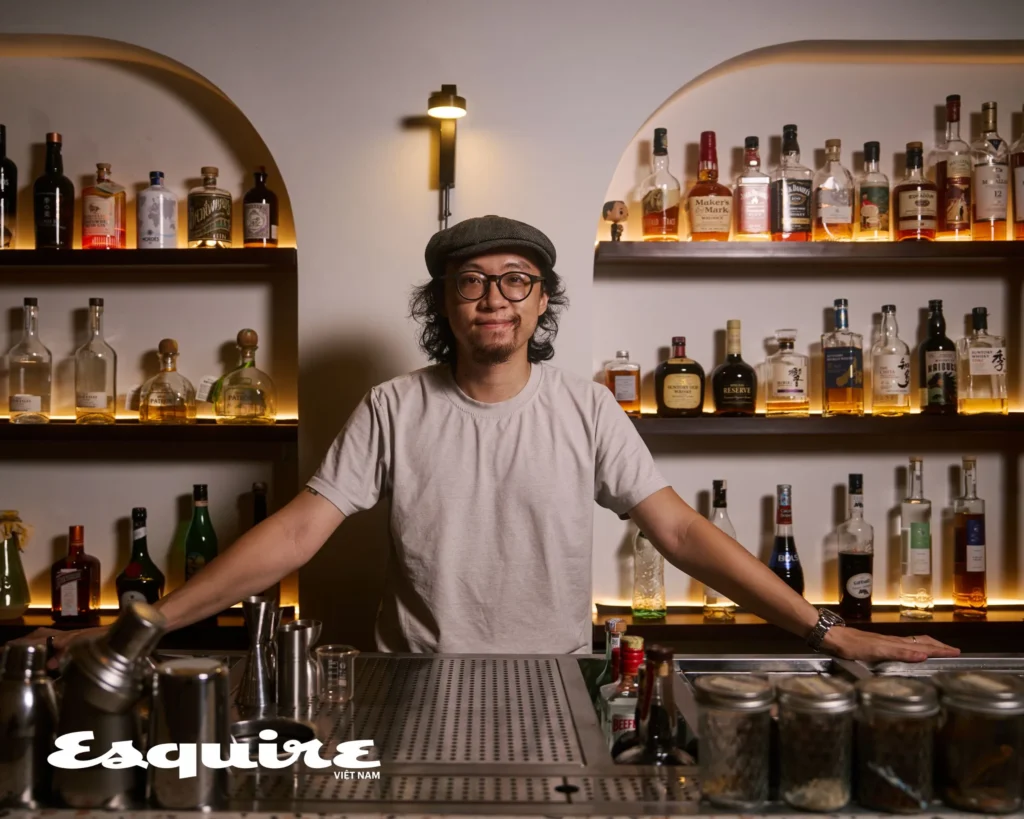
The classic martini ratio is about two ounces of gin to half an ounce of vermouth—but, as Nguyen notes, it can always be tinkered with based on one’s personal preference. For quick service at home, he suggests pre-mixing gin and vermouth, then keeping a flask in the freezer so it pours out “super sticky, smooth” without the need for dilution. And contrary to Bond’s famous instruction, the ideal martini is stirred—or even thrown, poured back and forth between tins to chill and aerate without watering it down.
Ready to try it out? Here’s a simple way to make a martini—but make it Vietnamese.
How to make a Vietnamese Martini
Inspired by Conor Nguyen, Hermit Cocktail Bar, Saigon
Ingredients
- 2 oz Vietnamese gin of your choice
- 0.5 oz Vietnamese rice wine (in place of vermouth)
Method:
Step 1: Add gin and rice wine to a mixing glass with ice.
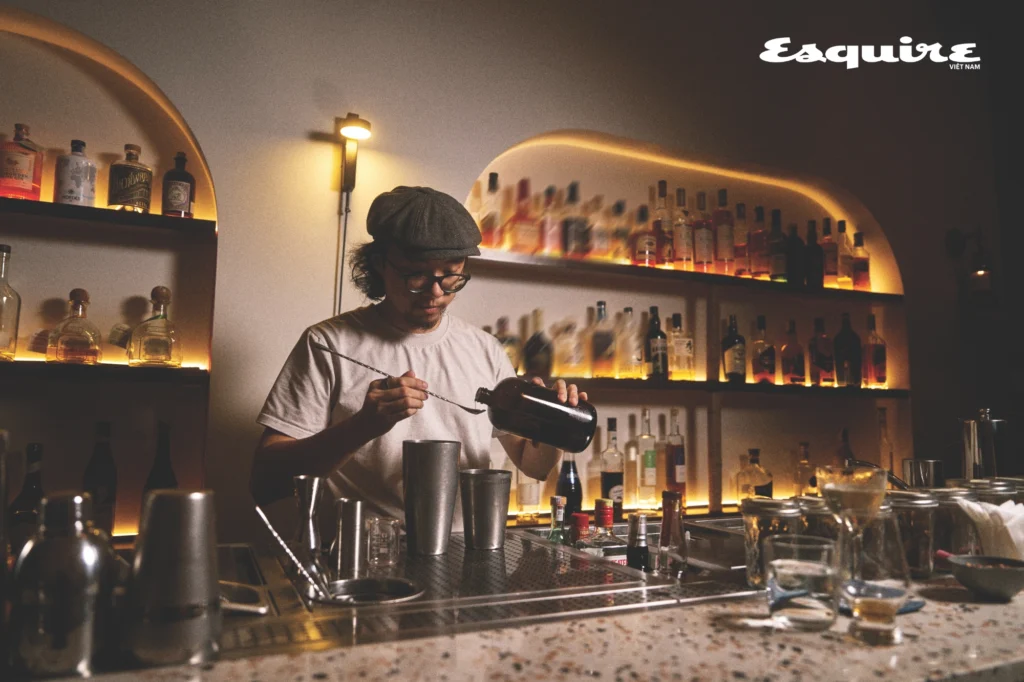
Step 2: Stir (or “throw” between tins, if you want to aerate) until well chilled.
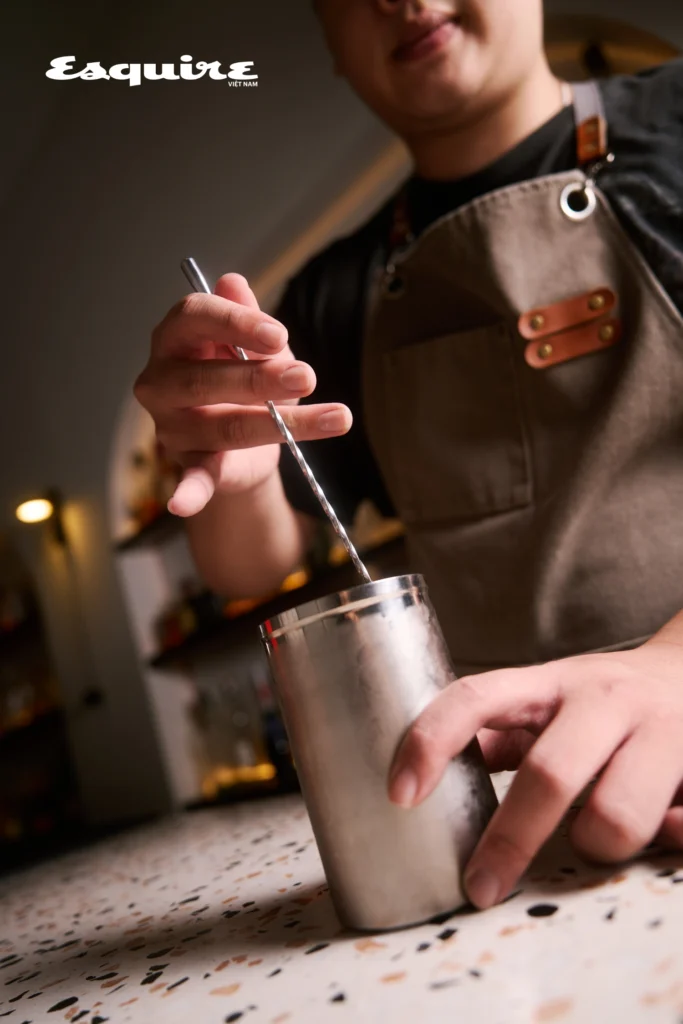
Step 3: Strain into a chilled martini glass or coupe glass.
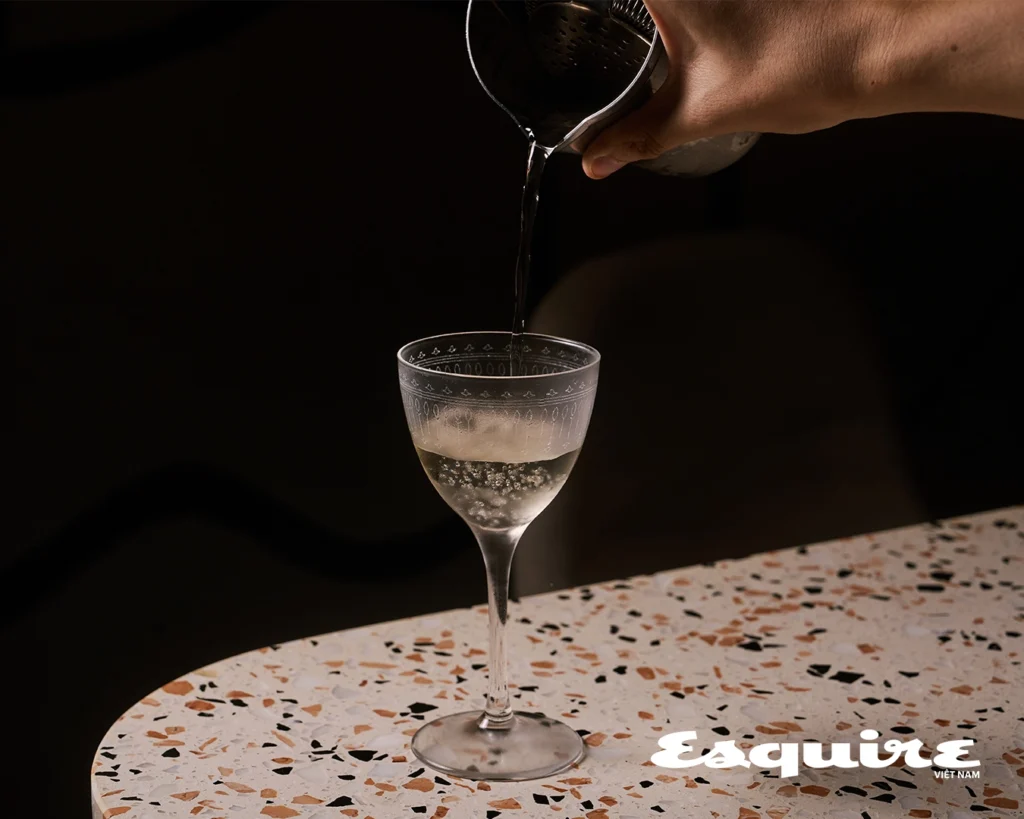
Step 4: Garnish with a lemon twist or leave ungarnished for a clean, minimalist serve.

Photo by Alex Yem