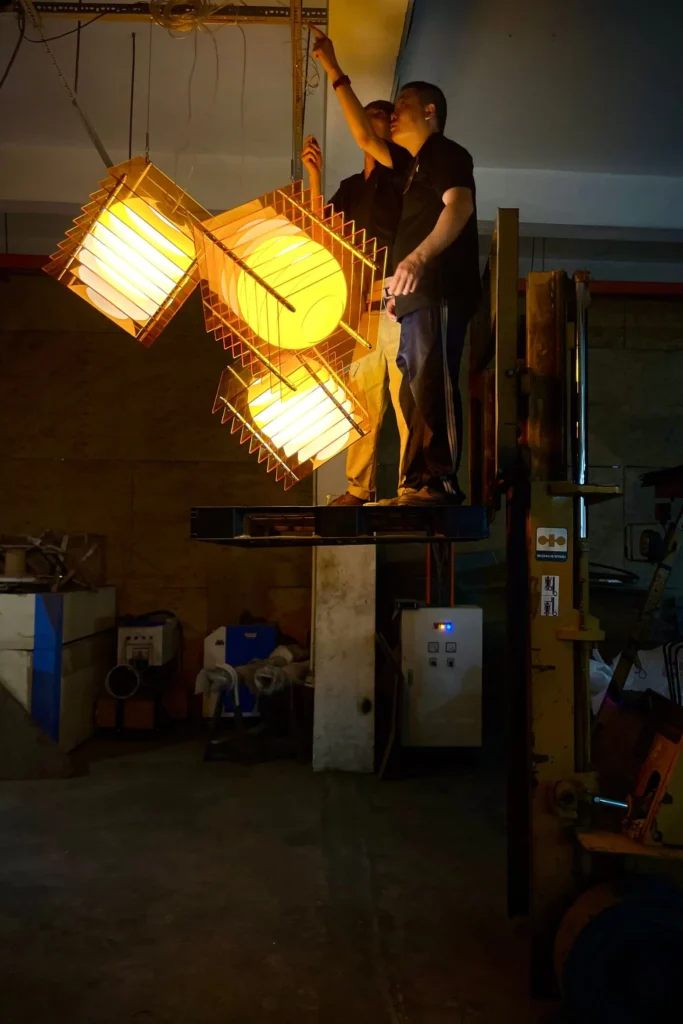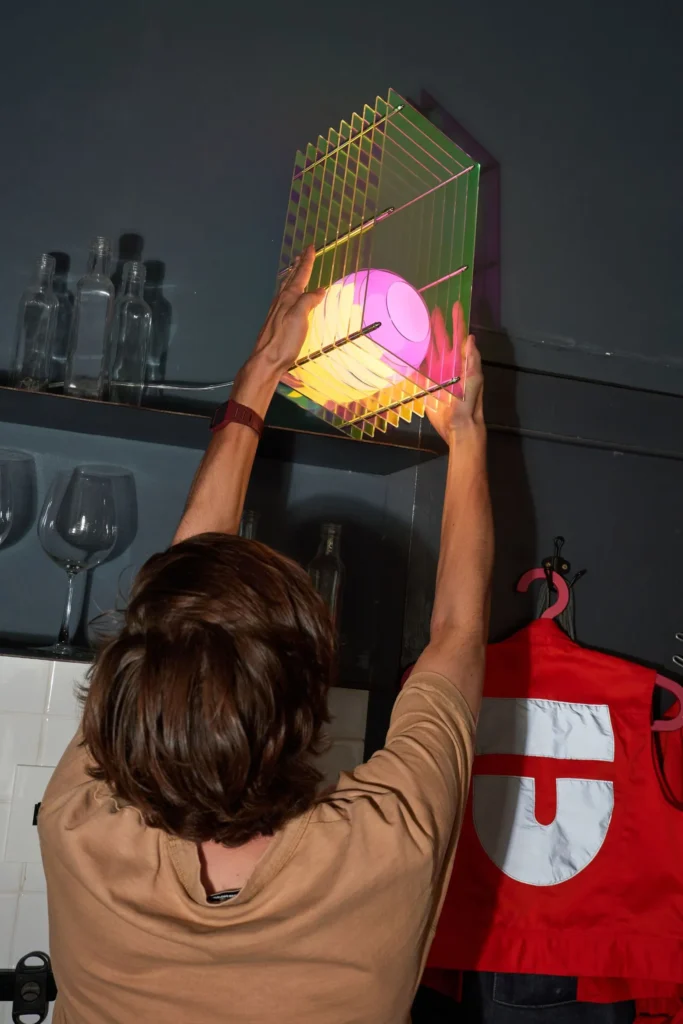
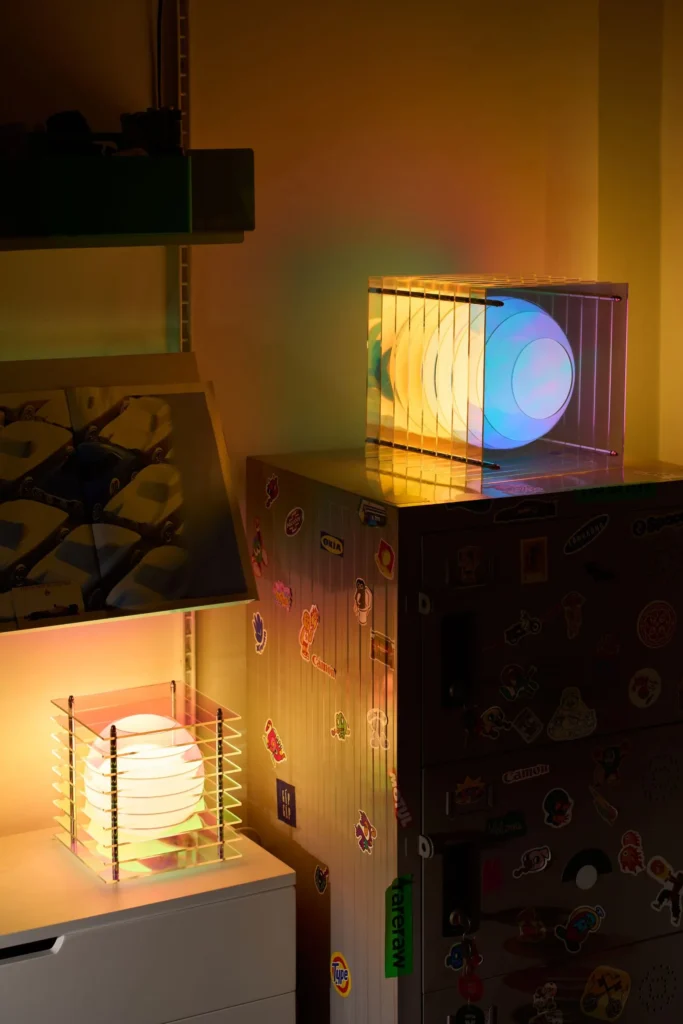
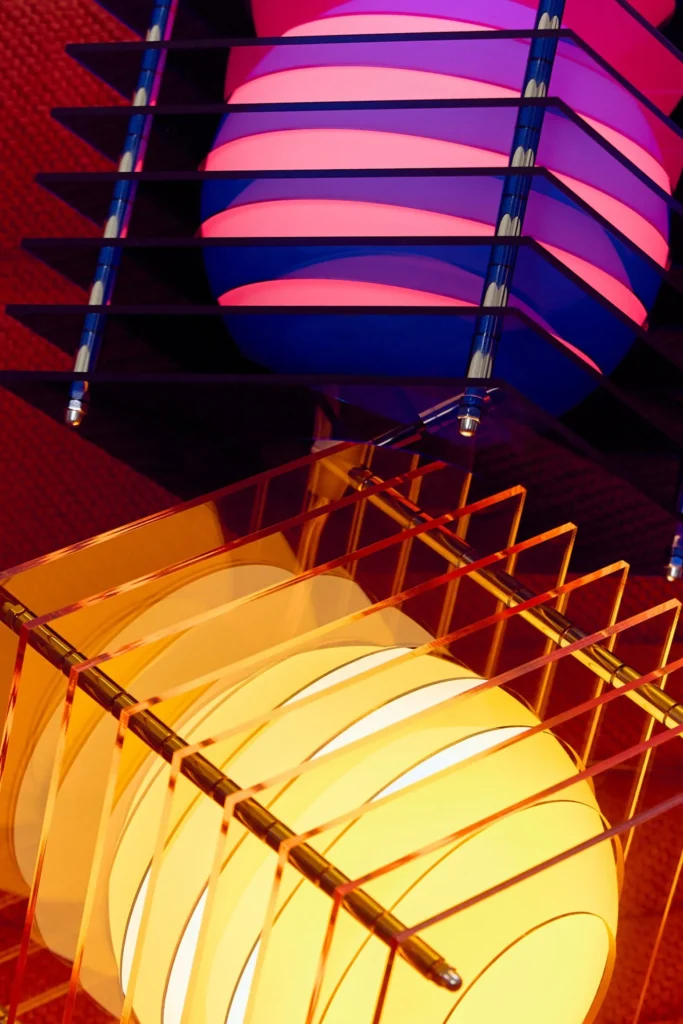
Walk into almost any coffee shop in central Saigon, and there’s a good chance you’ll spot it: a glowing orb suspended within layers of colourful acrylic, quietly sitting on a shelf. Or maybe you’ve seen its orange, cubic form flicker past in a get-ready for the Met Gala video with A$AP Rocky, where the hotel suite was filled with design objects that made him feel like home.
The form is instantly recognizable—appearing in cafés, restaurants, and galleries around the world. “A key moment was in 2023, when the curator from the Pompidou iconic museum Boutique in Paris took an interest in the lamp. That felt like a significant milestone,” says Thomas Bình-Minh Vincent, Creative Director and Co-founder of BằNG—the mind behind the now-ubiquitous Lớp Light.
Born in France into a household that encouraged a do-it-yourself mindset, Thomas enrolled in art classes at the age of eight before going on to train as an industrial product designer. He later moved to Vietnam and launched BằNG in 2021—already reaching institutions such as MoMA Design Store in New York, Centre Pompidou, and Fondation Louis Vuitton in Paris. The brand has since earned accolades, including the Archiproducts Design Award (2023), MoMA’s historic Prize Design Award (2024), VMark Design Award (2024), and the German Design Award (2025).
Rooted in materials and process, and deeply shaped by the workshop environment, BằNG operates under a clear ethos: “Unboring Objects”—pieces that spark curiosity, invite interaction, while remaining functional and grounded in common sense. The name itself reflects this philosophy. “Bằng” is a Vietnamese preposition meaning “made by” (a process) or “made from/of” (a material): làm bằng tay (made by hand), làm bằng sắt (made of steel).
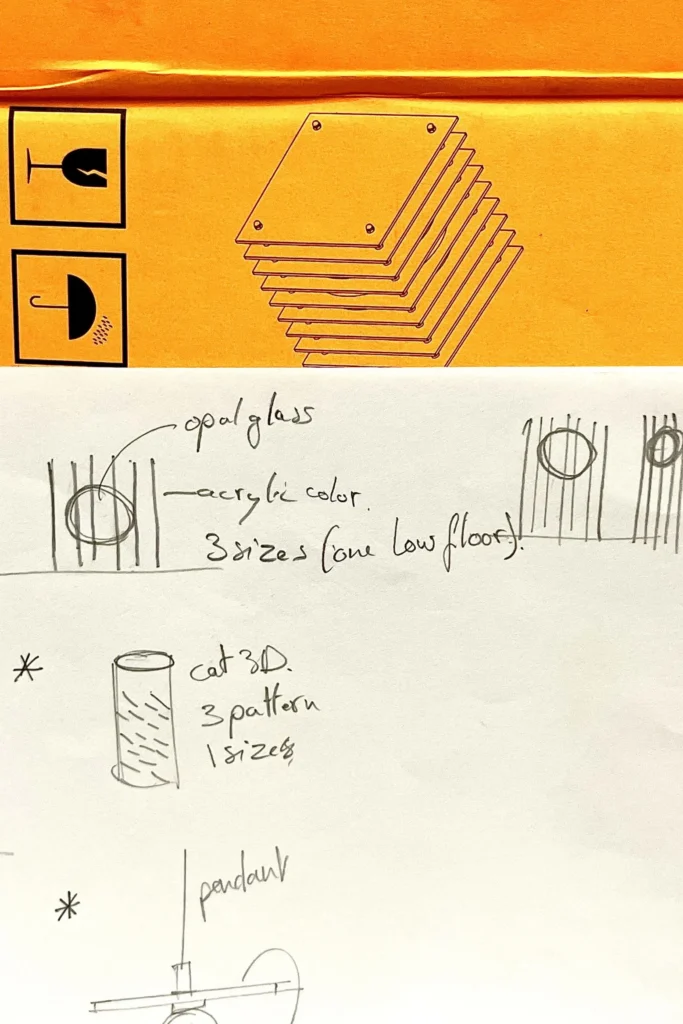
The creation of the hero products of BằNG, Lớp Sculptural Lighting starts with a simple ideal: something floating within something, making it feel like it’s floating. Thomas placed a small glowing sphere between multiple layers of acrylic.
When the lamp is on, the sphere reflects across each layer. Even though the sphere stays still, the reflections repeat and create a sense of movement—like a trail of light, or a moment frozen in layers. That’s where the name comes from: “lớp” means layers in Vietnamese.
The final product went through just one physical prototype before moving into production, a decision Thomas credits to his four guiding principles: understandable, open, innovative, and grounded in common sense.
These pillars push him to design objects that are intuitive to use, easy to disassemble and repair, and approachable enough for users to adapt and make the objects their own, creating a real relationship between the object and the user. Lớp Sculptural Light, for instance, uses standard bulbs and is fully repairable, giving it a far better chance of lasting over time.
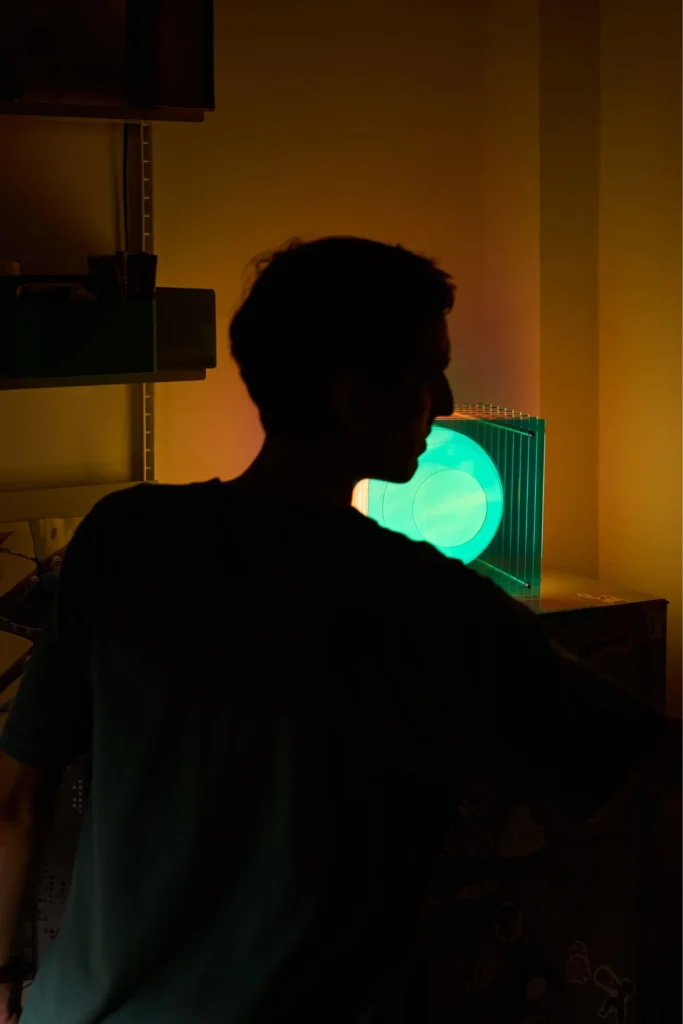
This thinking extends across BằNG’s broader body of work, from the modular Đan tray to the perforated metal Điểm furniture collection. The studio consistently works with straightforward materials—acrylic, metal, textile—embracing constraint as a creative driver rather than a limitation. “I wouldn’t say I’m ever ‘done’ with a material. Working within what we have often leads to the most interesting ideas,” Thomas notes.
I wouldn’t say I’m ever ‘done’ with a material. Working within what we have often leads to the most interesting ideas
As the designs have gained visibility, they’ve also entered the ecosystem of imitation. A quick search reveals countless copies. For BằNG, that reality is acknowledged, but not dwelled on. While the team takes necessary action, their focus remains on refining the work and strengthening the brand at its core.
“Craftsmanship is about understanding how something is made, and paying attention to every step of the process,” Thomas says. “It’s not defined by how many pieces you produce, but by how you produce them. Even at scale, the process should respect the materials, the construction, and the people behind it.”