In San Francisco, hearing Vietnamese on the street still makes me turn my head. I want to know who’s talking. Sometimes I want to join in.
I grew up in San Jose, California, home to the largest Vietnamese population of any city outside Vietnam. Vietnamese food was everywhere, from neighborhood bánh mì shops to the phở restaurants and markets that made up the backdrop of my childhood.
Just an hour north is San Francisco, one of the world’s great cities and a global hub for technology, innovation, business and food. I moved here more than a decade ago, drawn to its creative energy, cultural diversity and world-class dining scene. I’m still close enough to visit my mother back home, but Vietnamese life feels different in the two cities. Here, I’ve found my own places to return to, and food usually gives me an opening.
Some of those places remind me of growing up. Others show me what Vietnamese food can become when it meets the cultures, neighborhoods and people who make San Francisco what it is. I like that there’s room for both.
Put a few of them together and you have the makings of a very good day: a late breakfast in the Castro, lunch a little farther into the neighborhood, phở downtown for dinner and wine on Divisadero. Drawn from visits over time, this is the route I’d take.
Dinosaurs — Castro District
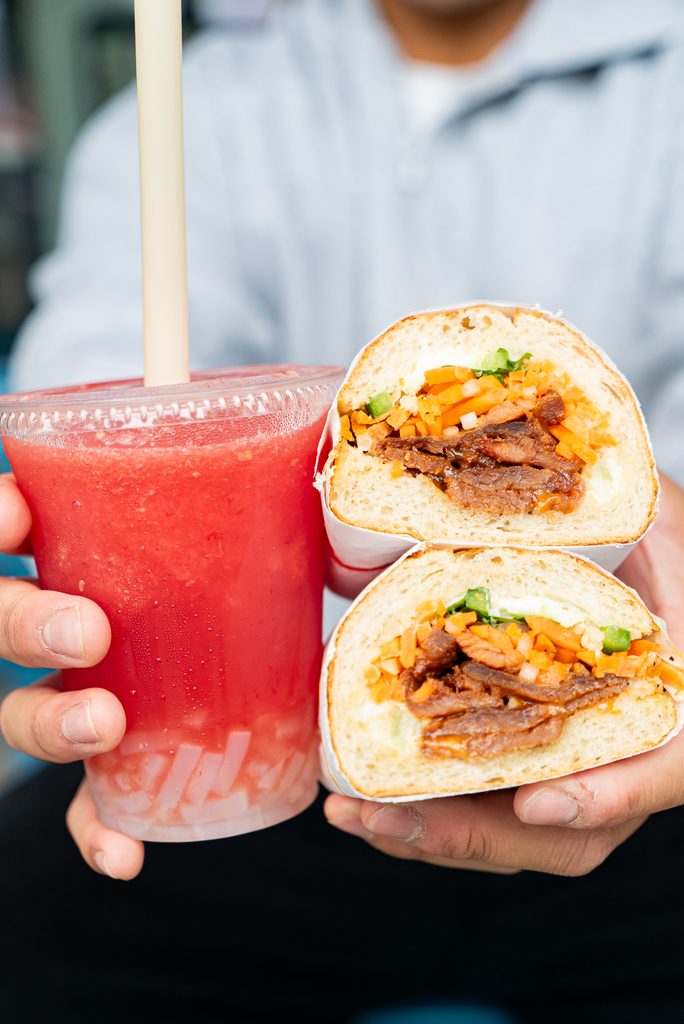
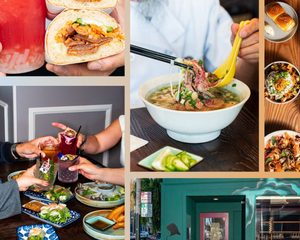
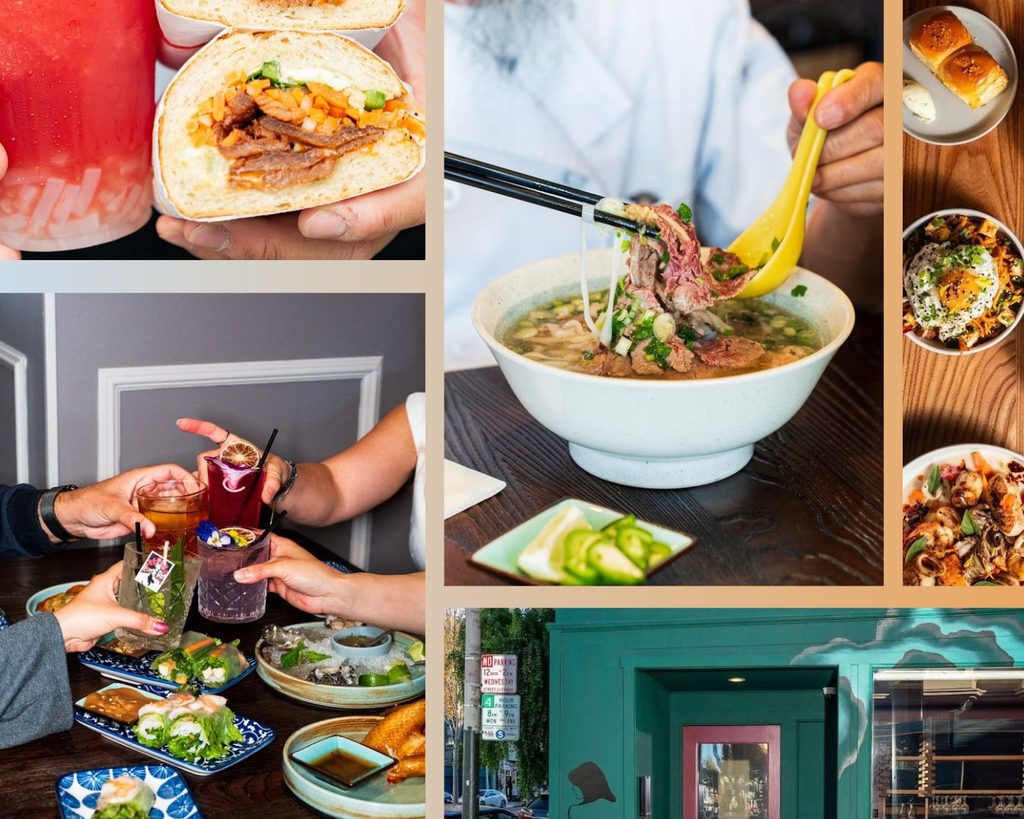
First stop: the Castro. Come hungry. At Dinosaurs on Market Street, my usual order isn’t actually a bánh mì. It’s the Pork & Shrimp fresh spring rolls. For my Filipino partner, I order the tocino bánh mì, one of the shop’s more inventive takes on the Vietnamese sandwich. His order brings together two cultures. Mine takes me straight back to San Jose.
The rolls remind me of the ones my mother used to bring home. Dinosaurs’ version is loaded and hearty, the kind of spring roll that makes a substantial meal. They cost several dollars more than I’m used to paying back home, an adjustment familiar enough after a decade in San Francisco. I keep coming back.
Alongside them, I like the Watermelon Litchi Smoothie, two flavors I’m happy to find together, especially on a sunny morning in the Castro. Dinosaurs’ original location sits in the heart of San Francisco’s historic LGBTQ neighborhood, where rainbow-painted crosswalks, Pride flags and colorful storefronts are part of the everyday scenery. It’s a particularly lively corner of the city to begin the day.
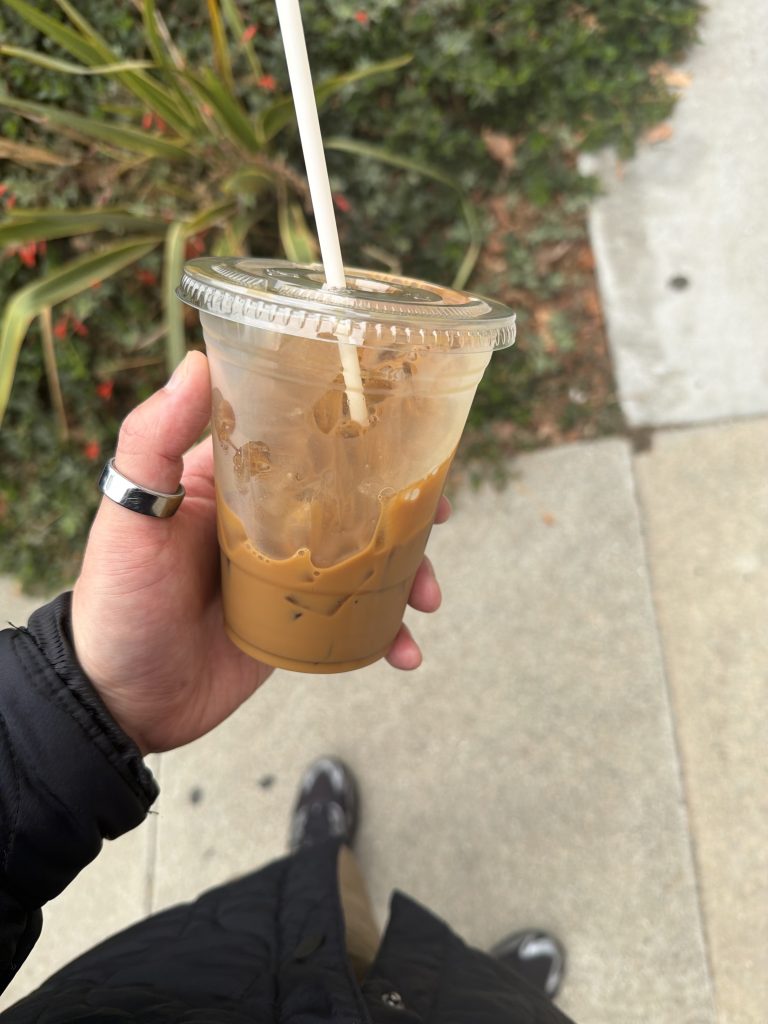
Then there’s the Vietnamese iced coffee: Café du Monde coffee, Longevity Brand sweetened condensed milk and ice. Founder Chris Nguyen grew up watching his father drink coffee every day, and Dinosaurs uses those same ingredients. For me, it’s a familiar jolt of energy, coffee in hand and the rest of San Francisco ahead.
As it turns out, the Vietnamese-Filipino connection runs much deeper than the menu.
Nguyen is a San Francisco native who grew up in the city’s Tenderloin neighborhood. His first job was at Subway, the sandwich chain, where he worked alongside Filipino colleagues. He also grew up eating Filipino food at friends’ homes, and some of those friends, whom he’s known since middle school, now help run Dinosaurs. They played a significant role in developing its Filipino-inspired recipes.
One example is the kare-kare bánh mì, a riff on the Filipino peanut-based stew traditionally made with oxtail. Nguyen told me Dinosaurs uses beef short rib instead, giving a familiar Filipino comfort dish an entirely different home: a Vietnamese baguette.
Nguyen’s journey to opening a sandwich shop was hardly straightforward. After working in the clothing business, he returned to his original ambition and signed the lease for Dinosaurs’ first Castro location in late 2009. There was just one problem.
“I didn’t have a single recipe,” he recalls.
He didn’t have suppliers, either. Growing up, Nguyen frequented Vietnamese sandwich institutions like Saigon Sandwich and Sing Sing in the Tenderloin. But when it came time to build something of his own, admiration alone wasn’t going to get him very far.
At one neighborhood shop, Nguyen approached a chef for guidance, only to be turned away. But something in his expression made the chef reconsider. He disappeared into the kitchen and returned with a torn food label bearing a supplier’s contact information. For Nguyen, that small act of generosity offered a way forward.
“That keeps me humble,” he says, explaining how the experience continues to influence the way he treats employees and gives people opportunities.
Today, Dinosaurs has expanded to five locations across California’s San Francisco Bay Area, and Nguyen continues to pay attention to the details behind his food. For the tocino, for instance, his team uses annatto and beet powders for coloring rather than synthetic red dyes.
For visitors from Vietnam, his advice is simple: “Come with an open mind.”
Tanglad — Castro District
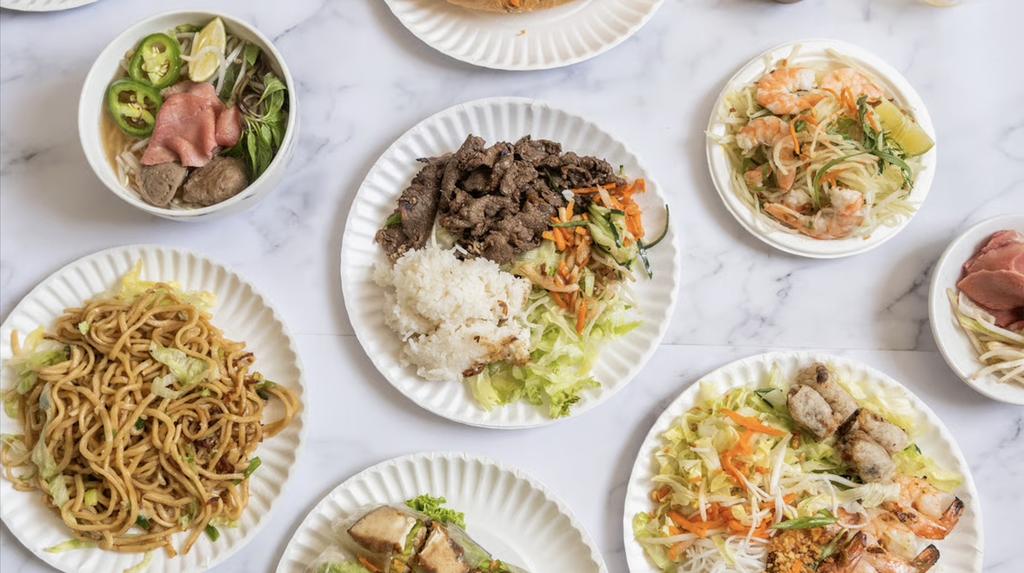
A little farther along Castro Street, Tanglad is another familiar stop. It’s a family-owned restaurant, and over time, my visits have come to include conversations with the family who runs it. I recognize the people working there. We talk. It’s a small part of my routine, but one I’ve come to value.
The menu offers the kind of Vietnamese comfort food I grew up with: phở, rice plates and vermicelli dishes. My go-to is the combination rice plate: a grilled pork chop, two fried chicken wings, an imperial roll and steamed rice. The option to substitute garlic noodles is a nice touch. An ice-cold can of Diet Coke washes it all down.
There’s plenty for someone discovering the cuisine for the first time, too. You can arrive knowing your order before you sit down or still figuring out where to begin.
For the family behind Tanglad, that familiarity has roots in meals at home. Among the memories they shared was a childhood love of combination phở: the smell of the broth, the fresh herbs and a hot bowl eaten with family. Food remains a connection to a Vietnamese mother and the culture she passed down. Running the restaurant is a way to keep that connection close.
That helps explain the welcome they hope to offer. They want the food to feel approachable and to respect the dishes they grew up eating. When a customer says something reminds them of childhood or a meal their family used to make, it means something.
The Castro contributes its own kind of closeness. People who first come in by chance become regulars; faces and orders become familiar, and recognition carries beyond the restaurant into the neighborhood. Through our conversations and my own visits, I’ve come to appreciate how much those everyday exchanges matter to a family-run shop.
For a visitor, Tanglad offers a chance to sit down to Vietnamese food in the middle of a neighborhood with a strong identity of its own. For me, it’s also a place where I’ve become a regular. Living in a city, you find home partly through repetition: another meal, another conversation, another reason to come back.
Turtle Tower — Financial District
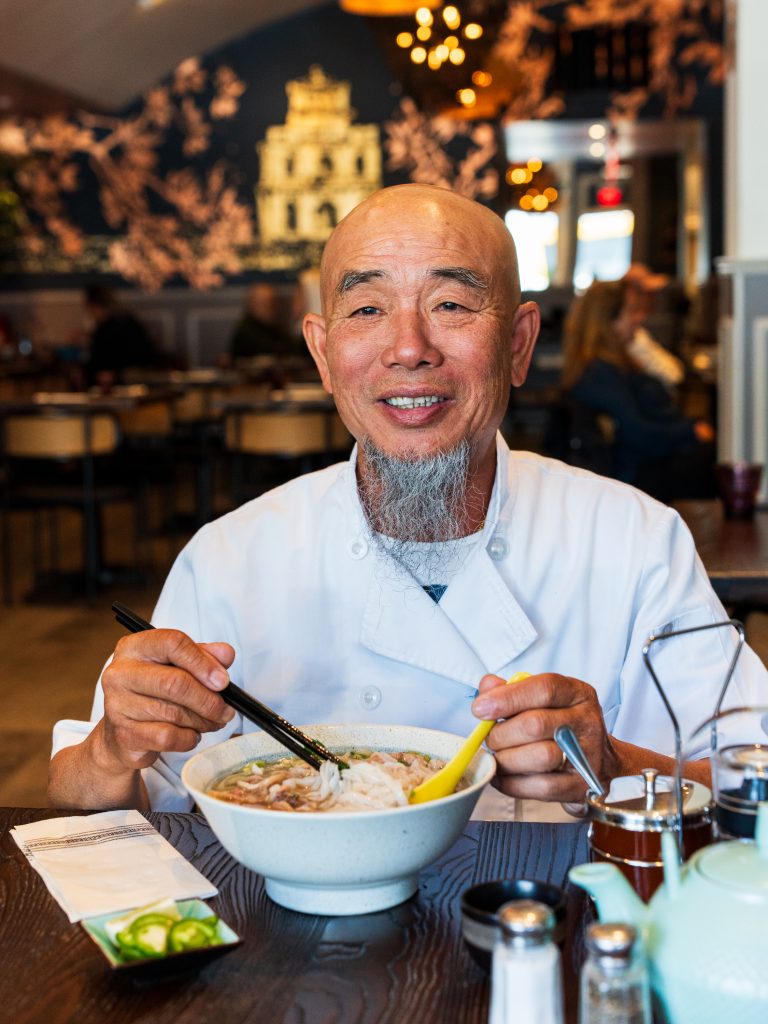
For dinner, I’d head downtown to San Francisco’s Financial District, where Turtle Tower founder Steven Pham has spent decades introducing San Franciscans to the food of Northern Vietnam.
When I interviewed Pham, I asked my questions in English. He answered in Vietnamese, the language he felt more comfortable speaking. Our conversation moved between the two, a small reminder of how much can be shared even when two people approach the same language differently.
Pham opened Turtle Tower in 2000 on Larkin Street in the Tenderloin. At the time, he saw an opportunity to introduce more people to the Northern Vietnamese cooking he knew from Hanoi.
For many Americans, phở is simply phở. But anyone familiar with Vietnam’s regional cooking knows that the country’s most famous noodle soup can inspire some strong opinions. Northern and Southern preparations have their own traditions, preferences and loyalists.
Pham’s approach has always been grounded in what he knows best.
During our conversation, he explained that he would feel less confident preparing a Southern specialty than the Northern dishes he grew up with. Phở remains central to Turtle Tower, but his interests extend to other foods associated with Hanoi.
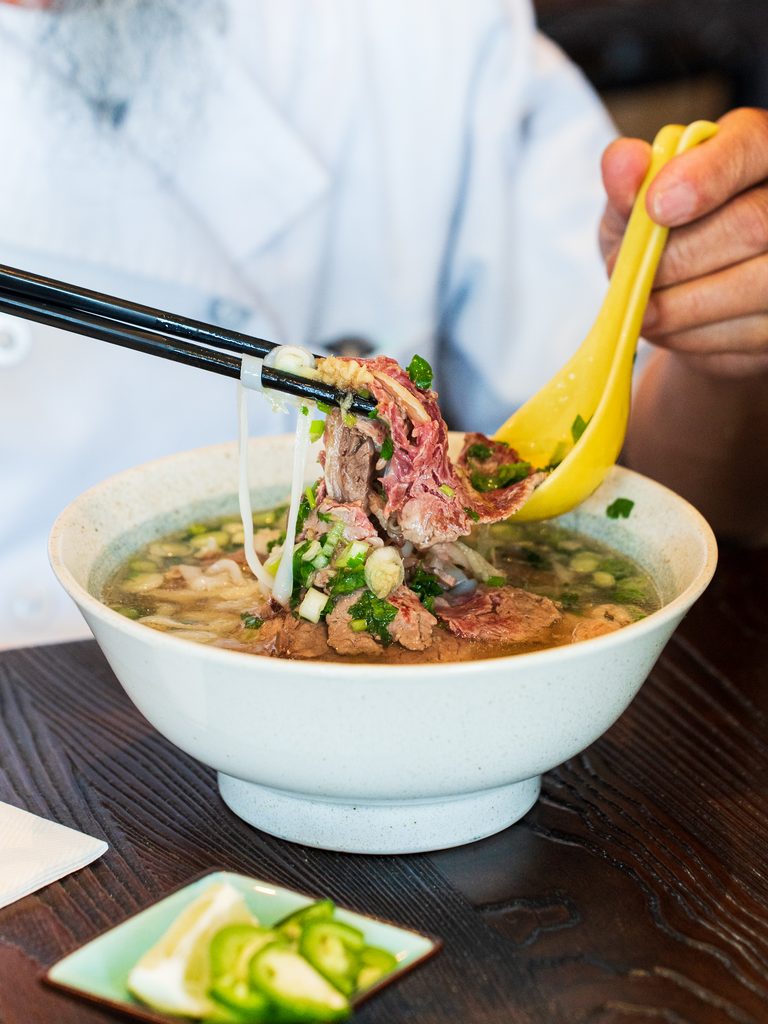
The restaurant has undergone its own transformation. After more than two decades as a San Francisco institution, Turtle Tower’s original Tenderloin location closed in September 2023, followed by its remaining South of Market location that November. For a time, it appeared the city had lost one of its best-known destinations for Northern Vietnamese phở.
But in March 2025, Pham returned with new business partners, reopening Turtle Tower in the Financial District. The comeback brought a new setting and a different audience.
Its reputation, however, had already traveled far beyond the neighborhood. During our conversation, Pham pulled out his phone and showed me photographs from the restaurant’s archives, including one of R&B superstar Usher visiting years ago. According to Pham, Usher had heard that Turtle Tower served some of the best phở around and came to try it for himself.
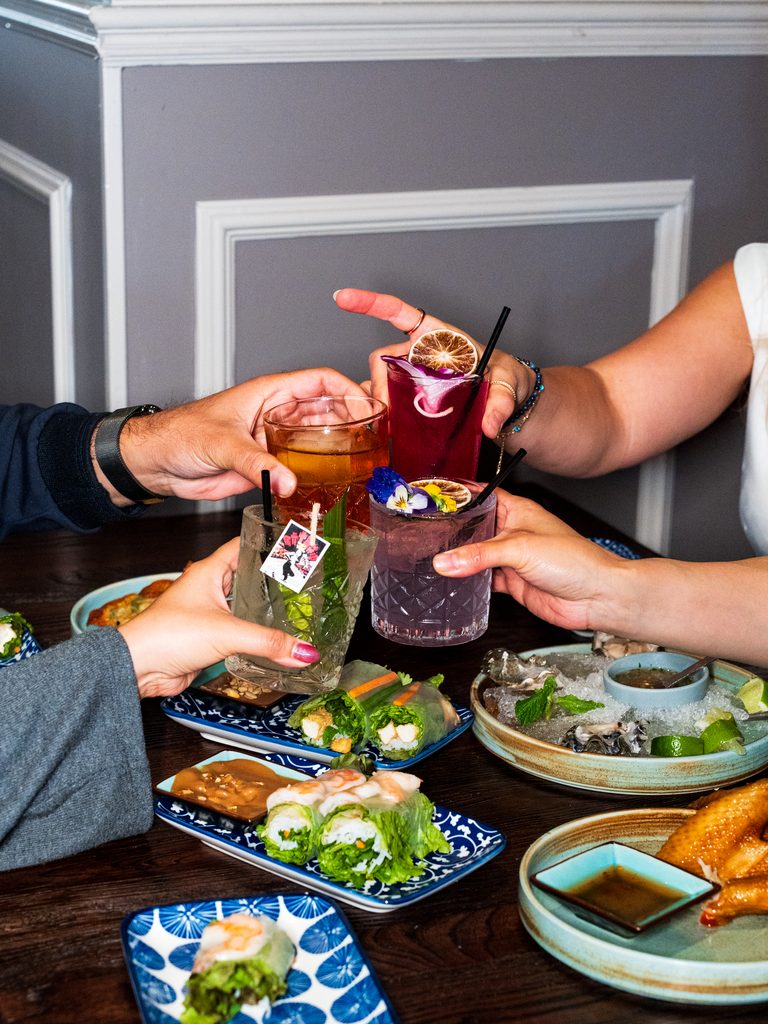
It’s a fun piece of restaurant history, but the more interesting story is how Turtle Tower’s audience has evolved. Pham recalls serving more Vietnamese customers in the Tenderloin. Downtown, his clientele includes more non-Vietnamese diners, many encountering Northern Vietnamese food through his restaurant.
Through those changes, Pham told me, the foundation of his cooking has stayed the same. I find something reassuring in his confidence in the food he knows, whether he’s serving someone who grew up with it or someone tasting it for the first time. Not every dish needs to be reinvented.
GiGi’s — Divisadero Street
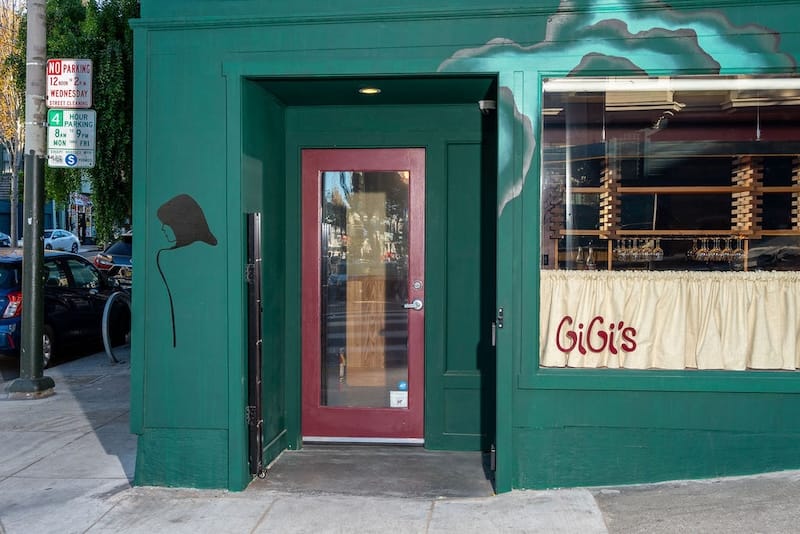
I’d finish on Divisadero Street, where the pace of San Francisco feels a little different. Away from the bustle of downtown, the neighborhood has a quieter, more intimate energy, with independent restaurants, neighborhood bars and storefronts that invite you to slow down. It’s a fitting setting for GiGi’s, a Vietnamese-inspired wine bar that feels like a departure from the restaurants earlier in the day.
Inside, gold accents catch the light against saturated greens and deep maroons. Rich velvet textures give the room a softness that feels both luxurious and inviting. The artwork adds another layer of personality. There’s a moody elegance to the space, but something about it also feels familiar.
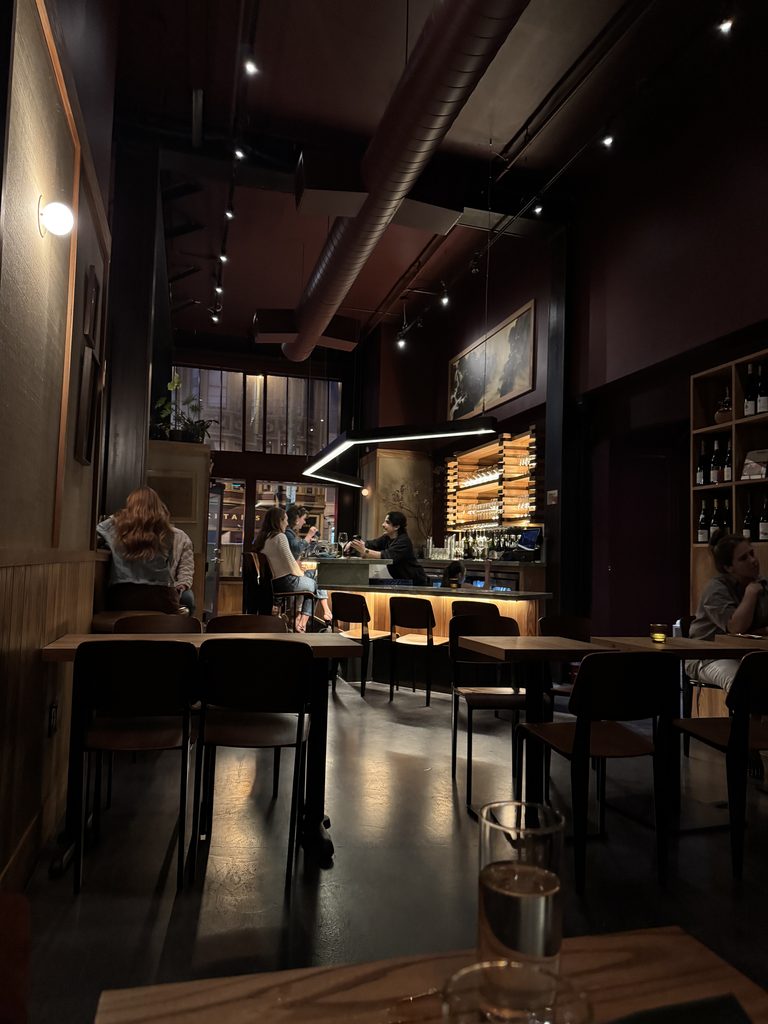
Chef-partner Tu David Phu later gave that feeling a setting: his mother’s living room during a Sunday gathering in the 1980s and ’90s.
There were arguments about politics, plenty of laughter and karaoke. The younger generation brought its own soundtrack, with Whitney Houston, Mariah Carey and Michael Jackson in the mix. Tu wanted to capture the spirit of those gatherings and bring it into a wine bar.
It’s a distinctly Vietnamese-American memory, one that feels less concerned with presenting a particular version of Vietnam than with celebrating the lives Vietnamese families have built elsewhere.
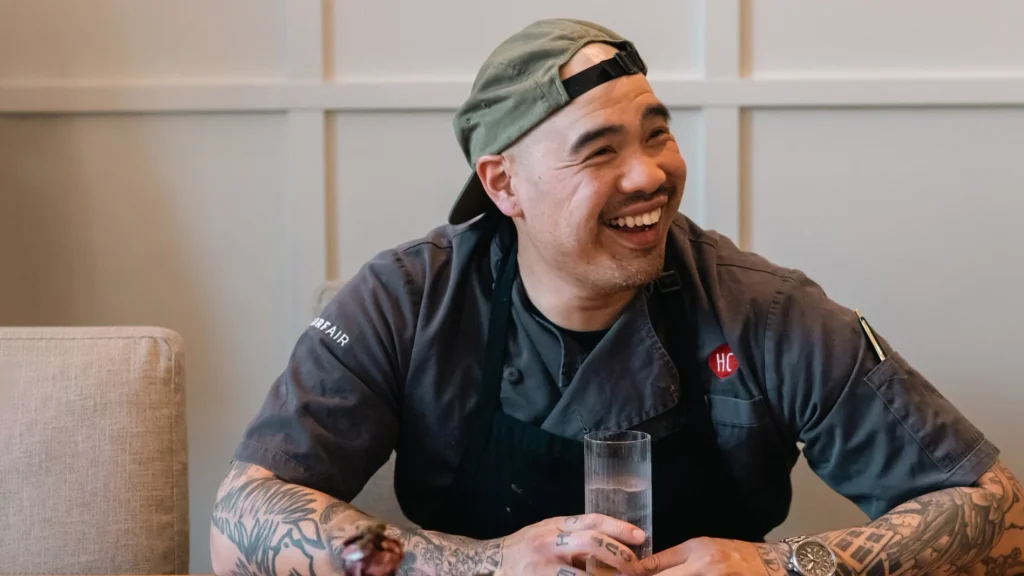
Tu grew up in Oakland, the son of Vietnamese refugees. In our conversation, he spoke candidly about the expectations attached to being a Vietnamese-American chef, and how those expectations can sometimes limit the stories people tell about Vietnamese food.
He also reflected on the distance between the Vietnam some families remember and the country as it exists today. For parts of the diaspora, memories of Vietnam can remain tied to the circumstances of departure, even as the country itself continues to change.
“I want to be able to evolve forward, but still have it be familiar,” he says.
At GiGi’s, that philosophy takes shape through a wine program and a menu that draws on Vietnamese flavors without confining them to a traditional restaurant format. There’s room to experiment, to play with expectations and, just as importantly, to enjoy yourself.
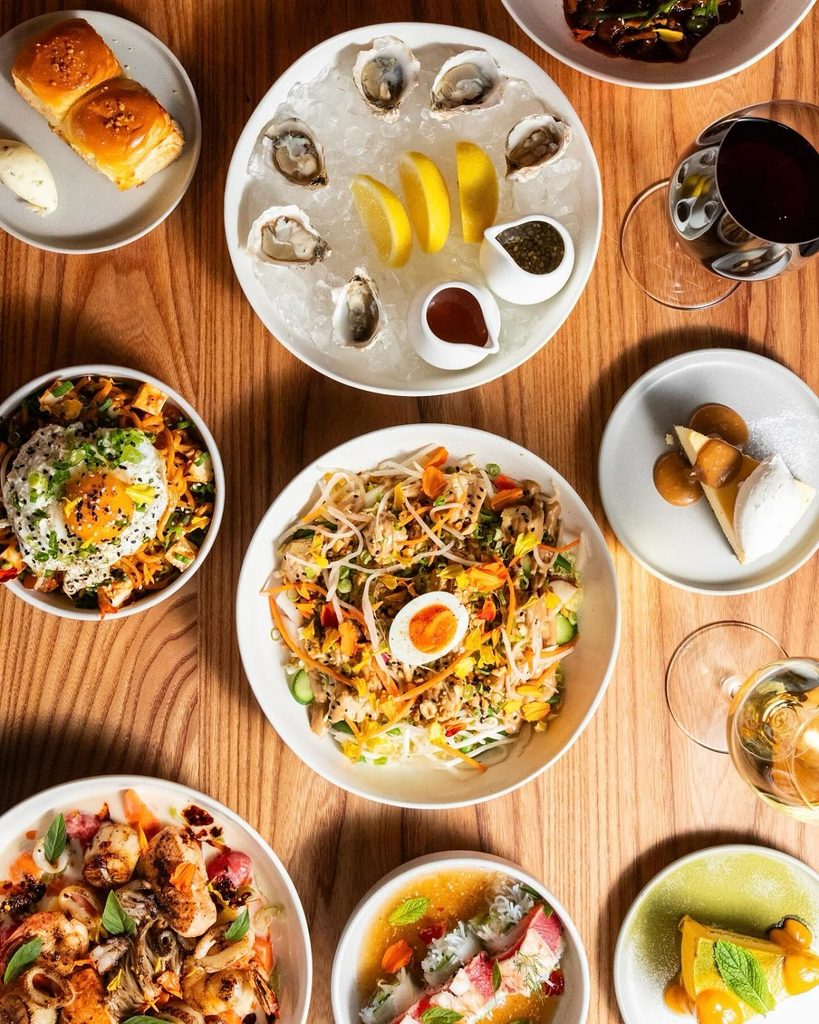
During my visit, I noticed a server taking care with the pronunciation of Vietnamese dishes. It was a small gesture, but one that stayed with me. Amid the art, wine and more conspicuous pleasures of the room, there was also attention to how Vietnamese food was being introduced.
And then there was dessert.
I had the chè chuối, the Vietnamese banana dessert I grew up eating with my family. One spoonful brought back that familiar sweetness. Then came the cinnamon, an unexpected flourish that I noticed and appreciated. It was the exclamation point to the meal, a familiar taste made new without losing what made it special in the first place.
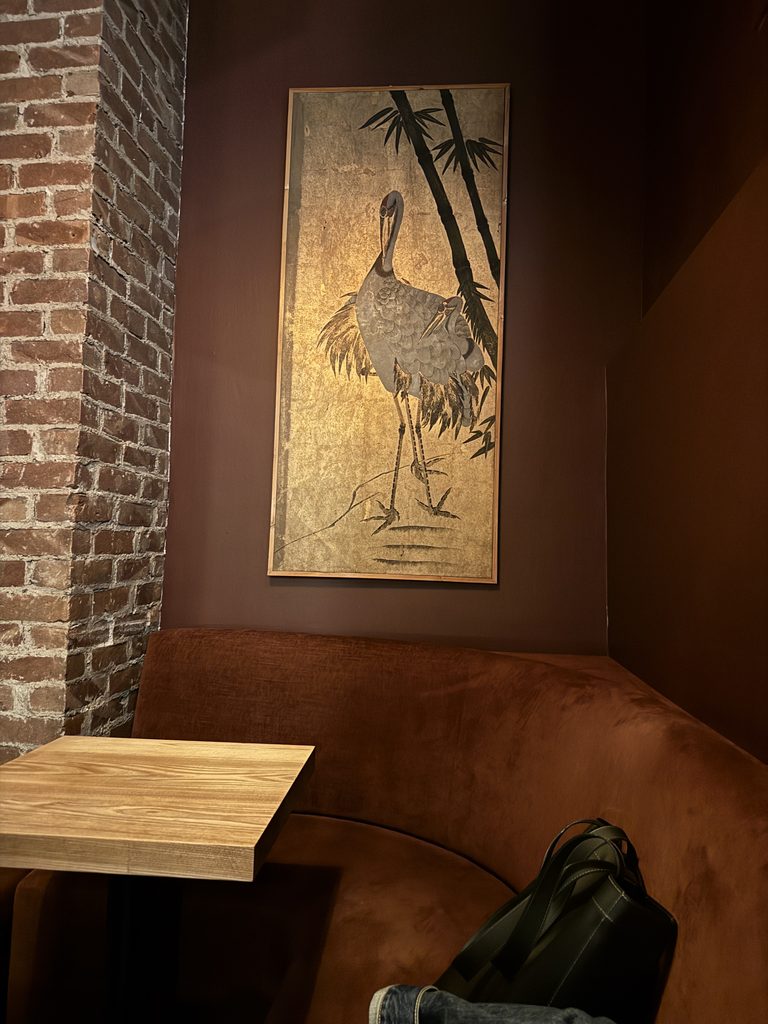
Tu wants GiGi’s to be a place for celebration. He spoke about growing tired of Vietnamese-American narratives that continually returned to suffering and hardship, leaving less space for the joy, creativity and ordinary pleasures of being Vietnamese.
“It didn’t give us room to celebrate,” he says. “So I wanted to come in with GiGi’s in a moment of celebration.”
After a day spent moving between different interpretations of Vietnamese food, that sentiment feels like a fitting place to end.
Some of the places I return to in San Francisco remind me of the Vietnamese food I grew up eating. Others introduce me to something I wouldn’t have imagined back then. The pleasure is discovering how naturally those experiences can coexist.
I’d start the day with spring rolls that remind me of my mother. I’d end it in a wine bar inspired by someone else’s.
And somewhere between the two, San Francisco feels a little more like home.