In the humid, high-octane atmosphere of the North Carolina season premiere of Top Chef Season 23, the asphalt of the racetrack radiated a staggering 130°F. For most contestants, the setting was a daunting curveball, a trial by fire in the most literal sense.
But for Chef Duyen Ha, standing amidst the shimmering heat waves and the roar of engines, it felt like kismet. Just a year prior, Ha had been hand-picked by a NASCAR team, Legacy Motor Club, to pilot a disruptive new hospitality program. The opportunity arose when her close friend, Sarah Turner Wells, was tasked with building a first-of-its-kind hospitality program for the team and reached out to Ha with the “crazy” proposition.
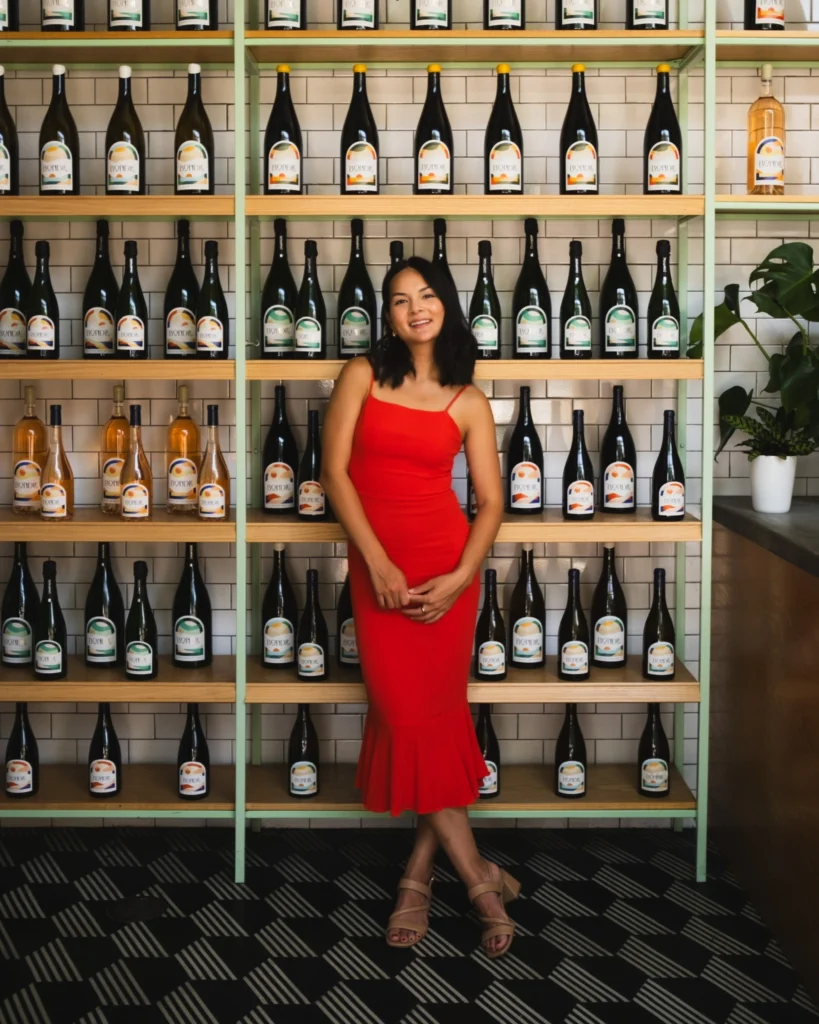
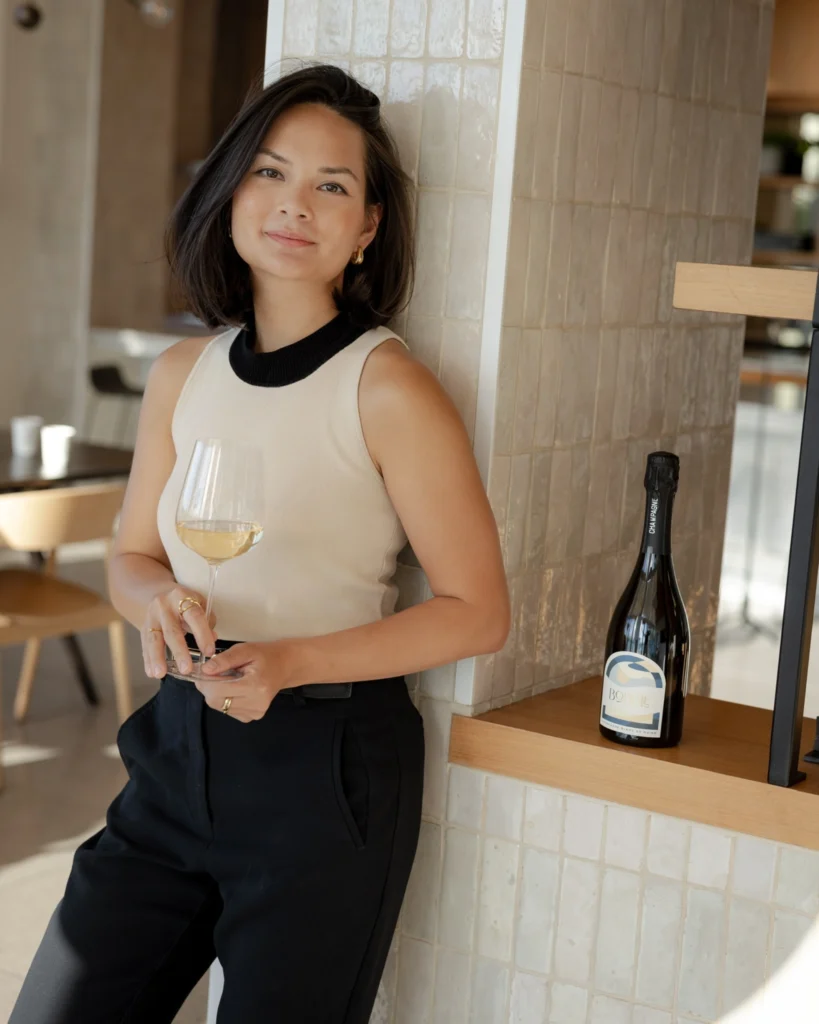
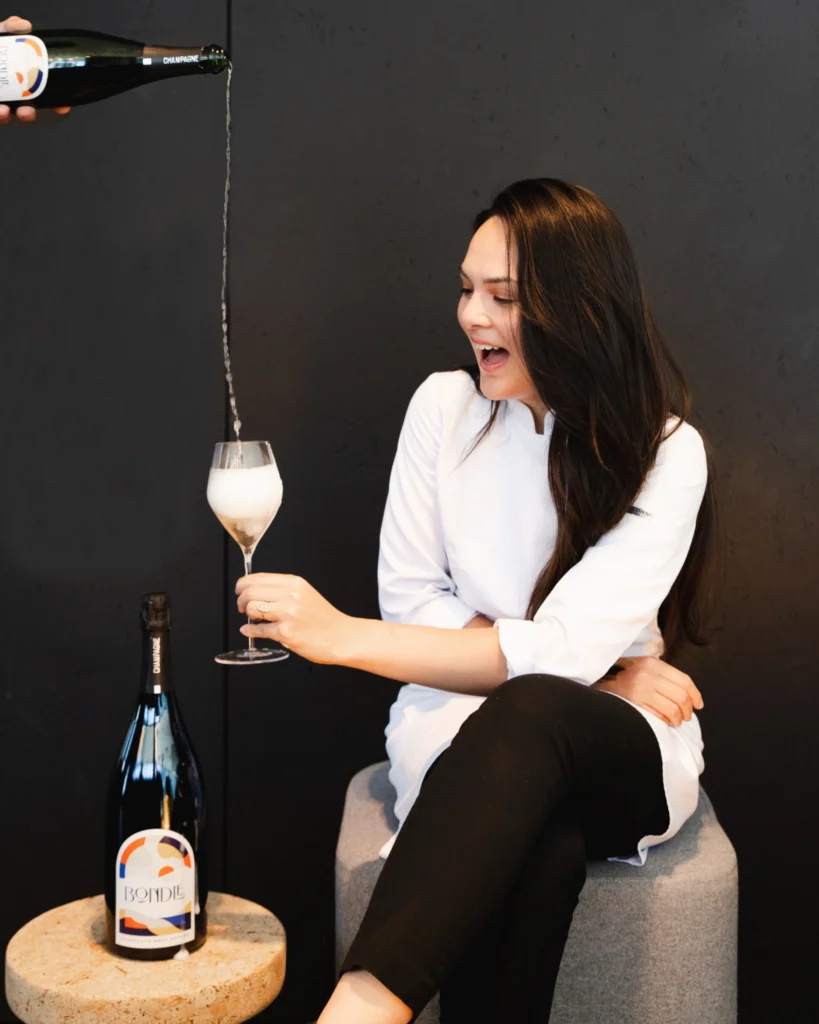
Although Ha had stepped away from full-time kitchen work to run her wine company, Bondle, the pilot program’s disruptive nature and the chance to “create the manual” for a mobile restaurant on the track proved too unique to pass up. She spent months immersing herself in the world of Charlotte, learning the smoky nuances of whole-hog barbecue and the specific rhythms of the Carolinas, a region she previously knew almost nothing about.
As the production van pulled up to the track and she spotted Jimmie Johnson, the realization hit her with the force of a lead foot on a gas pedal. “I know exactly where we’re going,” she thought. There was something destined happening.
This sense of destiny had been building for months, beginning with a relentless pursuit by the show’s casting producers. “She really wanted to make sure I got the message,” Ha recalls, laughing. “She DM’d my personal, filled in the contact form, and emailed me.”
At the time, Ha was at a crossroads. Between running her wine company, Bondle, and her bespoke dinner series, The Cuisson, she wasn’t sure if she could justify a two-month hiatus from her life and businesses. She hadn’t even “dreamt that big” for Top Chef, believing that if she ever did it, she’d need six months of pure, uninterrupted preparation.
But the universe, and her mother, had other plans. “My mom said to me, ‘You don’t get opportunities twice. This is happening for a reason.’”
My mom said to me, ‘You don’t get opportunities twice. This is happening for a reason’
Ha’s path to the Top Chef kitchen was anything but linear, marked by a series of high-stakes reinventions. Long before she was a culinary force, she was navigating the worlds of tech and politics. She spent years in the fast-paced corridors of Google and worked on the Obama campaign, experiences that honed her organizational grit and strategic thinking.
But despite the prestige of those roles, something was missing. To propel herself forward, she moved to Paris and enrolled at FERRANDI, arguably the most prestigious culinary school in France. She finished at the top of her class, a feat that opened the doors to some of the world’s most intimidating kitchens. She went on to train at legendary Michelin three-starred institutions, including Alain Passard’s Arpège and Mauro Colagreco’s Mirazur.
This rigorous training grounded her creativity in precision, yet her heart remained anchored in the storytelling of her heritage.
“You’ll sometimes see these chefs cooking Vietnamese food with French technique. I don’t do it just because it’s fancy or I’m trying to cheat Vietnamese food. It is my actual personal story,” Ha says. “Both of my parents are adopted, and my mom, you know, her father was an American soldier, but there’s French and British roots. So it was also a way for me to go back to France to kind of know and learn about this side of my life and my story that, like, I’ve never really been able to connect with.”
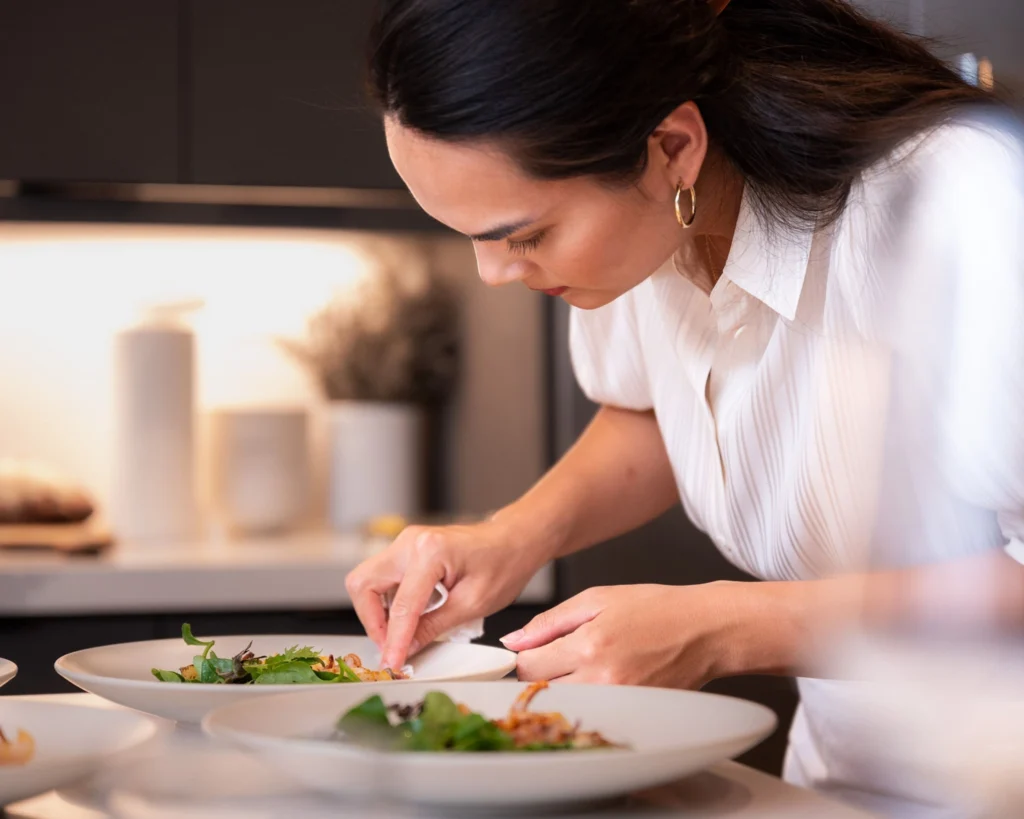
Ha entered the competition as a seasoned strategist. Having already won Food Network’s Chopped, she understood the unique mental architecture of culinary television. She knew that in the pressure cooker of the kitchen, intuition is a luxury that time often doesn’t afford.
“I am a very strategic person,” she admits. “It’s not just jumping because of risk, but how does this actually help me in the long run?”
Before she even packed her knives for the Carolinas, she had built a mental database of dishes, a formulaic approach to the chaos. She created subcategories of fish, seafood, pork, and vegetables, and for every category, she memorized six different preparations. No matter what the judges threw at her, she had already done the homework.
Yet, Top Chef is a psychological marathon. The isolation is perhaps the most grueling ingredient; away from family, friends, and the digital tethers of the modern world, the mental game becomes a battle of self-soothing.
While other chefs might have spiraled under the silence, Ha turned to an unexpected hobby: puzzling. “I got really into puzzling because I could just think about the puzzle,” she says. “I didn’t have to think about the competition.” It was this compartmentalization that allowed her to navigate the “whiplash” of the judges’ table.
For a chef of Ha’s caliber, the true value of the show was the rare, unfiltered feedback from titans like Tom Colicchio, Gail Simmons, and Kristen Kish. In a career where high-level executive chefs and founders often find themselves in an echo chamber of praise, Ha welcomed the “reality check” of a critique that could go on for hours.
“None of us had heard things like this about our food in five or ten plus years,” she reflects. It was a humbling return to the raw, honest pursuit of excellence, a reminder that even at the top, there is always room to sharpen the blade.
That pursuit was captured in her first-episode risk during the elimination challenge: a Norton sweet potato and pandan mochi with coconut cream and ginger syrup. In the history of Top Chef, the pastry station is often viewed as a cursed ground, the place where great chefs go to be eliminated.
But for Ha, the dish was a portal to her childhood, a memory of her mother’s kitchen in the middle of the night. “The whole house would be sleeping, and that was my mom’s alone time,” she describes. “She would always make this one dessert… there’s something incredibly nostalgic, smelling that sweet syrup of ginger and coconut.”
To understand Ha’s food is to understand the Vietnamese concept of ăn nhậu, convivial gatherings built around drinking, conversation, and dishes meant to be shared. In her household, food was never simply fuel. Growing up in a refugee family that didn’t have much, her parents expressed their love through what she calls the “extra steps” of hospitality.
They wouldn’t settle for supermarket chickens; they would drive an hour to a farm to hand-pick the birds. “I thought that was a normal experience,” Ha says. “I thought everybody had this sort of communal dining… I didn’t realize it was not normal until I went off to college.”
Entire weekends were spent cooking, using every part of the animal and honoring both the sacrifice and the culture they had carried with them to the United States. The meals themselves reflected the same layered philosophy.
“My favorite dish is bún riêu, which is this tomato pork-based soup with crab balls,” Ha says. “It has the tanginess from the tomato, you have seafood, you have pork—it hits all those different elements.” What she loves most about Vietnamese food, she explains, is how deeply it considers texture as well as flavor.
“Sometimes meats have this gelatinous or spongy texture, but we like that. Even the noodles like mì Quảng are one of my favorites because of the pillowy rice noodles.” Other dishes lean into freshness and balance, like gỏi cuốn, the fresh summer rolls that combine herbs, protein, and dipping sauces into a single bite.
“Vietnamese people care a lot about sauces,” she says. In her family, meals often unfolded around a communal hot pot centered on a dish called nhúng giấm, thin slices of beef poached in a vinegary broth and wrapped with herbs and vegetables from her parents’ garden. Diners would dip each bite into sauces like nước mắm or mắm nêm, fermented anchovies blended with pineapple and chilies.
“It’s so funky,” she says with a laugh. “But that’s the reason I love it. You get the freshness from the herbs, the different textures, and then you can have three different dipping sauces and have a totally different experience every time.”
This cultural throughline—the blend of Vietnamese ritual and the Gallic techniques she mastered in Paris—is what makes Ha’s perspective so distinct. Ha’s creativity is famously restless; she claims she has never created a dish twice. She treats her menus like a narrative, one that is constantly evolving.
When she returns to Vietnam today, she travels as a seeker. Her trips are a process of rediscovery. “In the US, a lot of Vietnamese restaurants are nostalgic, they’re based on what people remember from the 1960s or 1970s,” she explains. “But when you go to Vietnam, it’s a whole other world. The last time I went, I stayed for three weeks and gained ten pounds. But it was worth it.”
One discovery in particular stood out: a reinvented summer roll filled with julienned mango, cucumber, dried shrimp, and hot sauce. “I’d never seen anything like it,” she says. For Ha, these innovations are part of a larger cultural shift.
“The bánh mì didn’t exist until the 1950s,” she notes. “Even what we think of as classic Vietnamese dishes are relatively recent.” That spirit of reinvention is something she hopes to contribute to as well, whether through collaborations in Vietnam or through the stories she tells with her own cooking abroad.
“The world is very small,” she says. “We all talk to each other. I’d love to host a pop-up in Vietnam. I love seeing Vietnamese chefs push boundaries and redefine what Vietnamese food is.”
As the season of Top Chef progresses, the audience will see Ha navigating the delicate balance between her various identities: the Vietnamese refugee daughter, the FERRANDI-trained technician, and the savvy wine entrepreneur.
But through it all, the throughline remains her commitment to storytelling. “I think with Vietnamese food, there’s so much story behind it,” she says. “I was just trying to tell my story through dishes.”
In the end, Duyen Ha is a chef who understands that while technique can be taught and strategies can be mapped out, the soul of a dish comes from ritual. It comes from the willingness to drive that extra hour for the right chicken, the patience to puzzle through a problem, and the courage to serve a bowl of ginger and coconut syrup to the toughest judges in the world.
Her journey is a testament to the power of ăn nhậu and the belief that the best things in life are built at the table, shared with friends, and seasoned with the memories of home.